
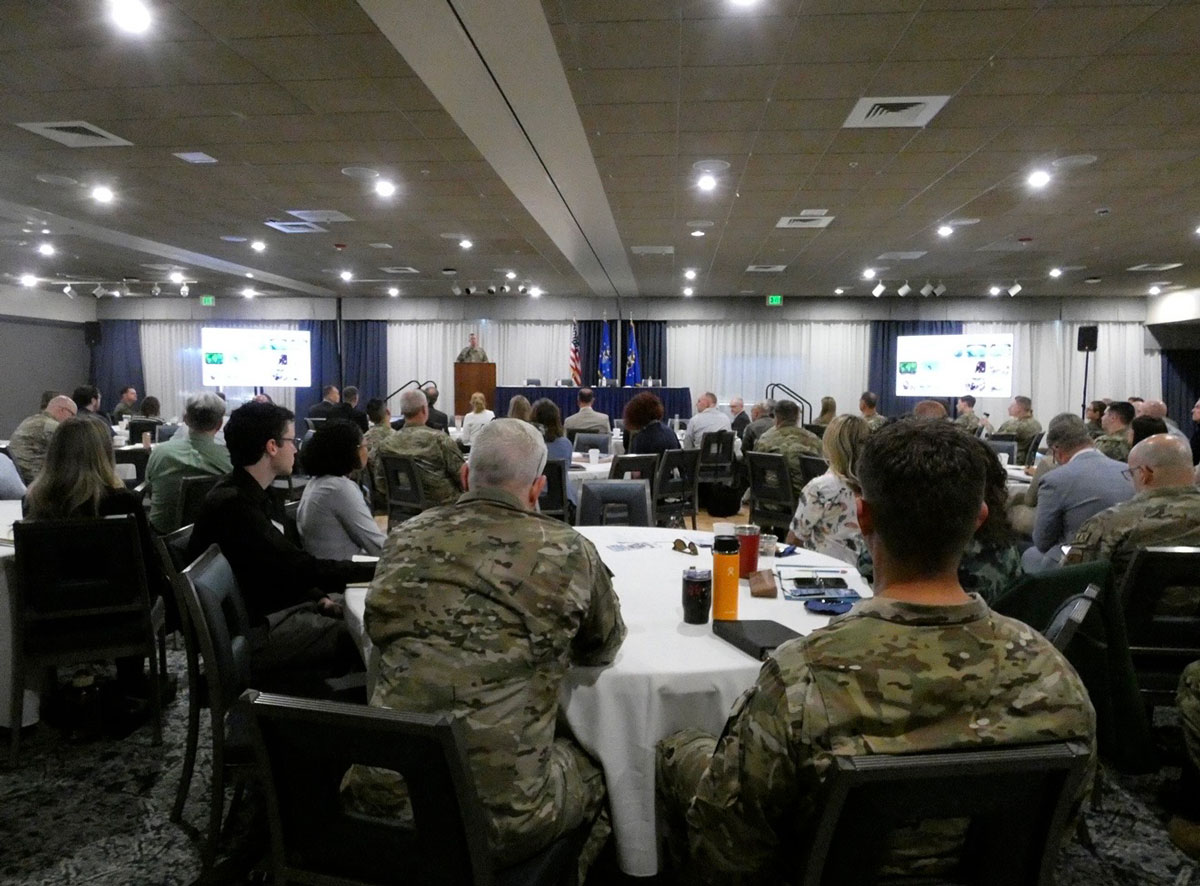
The Ted Stevens Center for Arctic Security Studies recently hosted an Arctic Security Primer in Colorado Springs, Colorado. The event kicked off the North American Aerospace Defense Command (NORAD) and U.S. Northern Command (USNORTHCOM) Arctic Week, a key component of the wider Homeland Defense Awareness Symposium (HDAS) hosted by the Homeland Defense Institute (HDI) and in partnership with the TSC, and Front Range Consortium.
As the strategic importance of the High North continues to grow, this condensed, high-impact educational primer provided joint warfighters and homeland defense practitioners with the foundational context necessary to enhance Arctic readiness.
“Defending our homeland begins with a comprehensive, shared understanding of the strategic realities in the high north,” said David Kang, the Director of Training, Exercise, and Wargaming (J7) for NORAD and U.S. NORTHCOM. “I want to extend my sincere thanks to the Ted Stevens Center for Arctic Security Studies for hosting the Arctic Security Primer during this year’s Homeland Defense Awareness Symposium. By convening military practitioners, allies, and regional experts, the Center continues to build the vital educational foundation and collaborative networks required to ensure a secure, stable, and resilient Arctic region.”

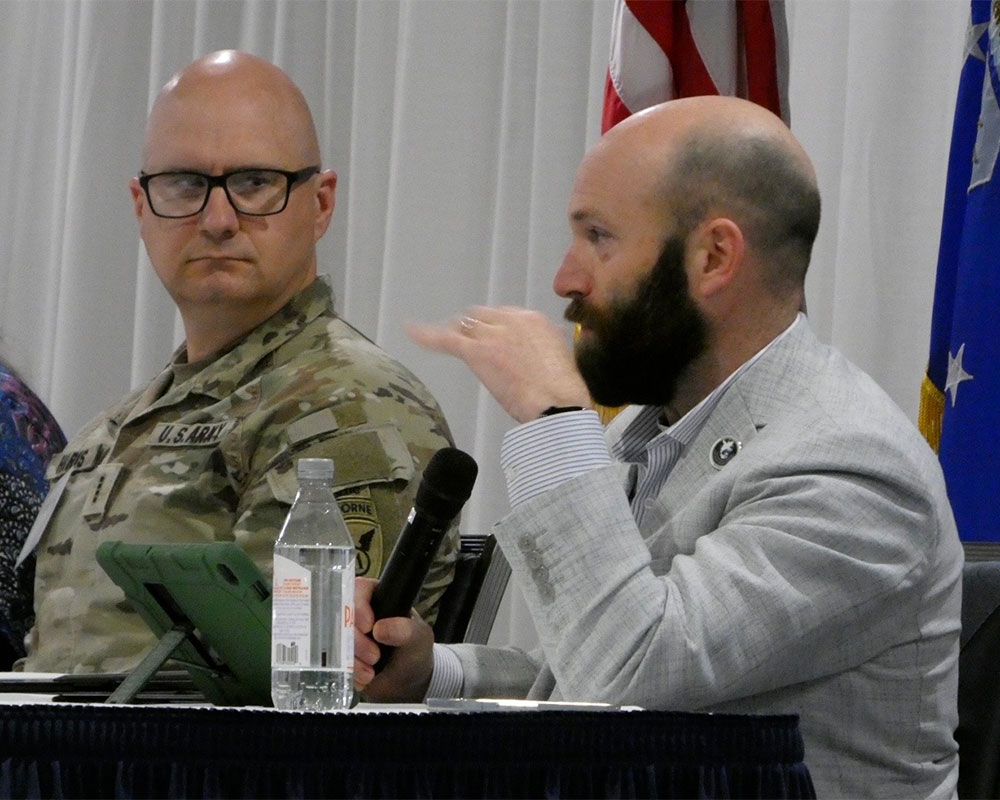
Delivered in partnership with HDI, the Arctic Security Primer is designed for military practitioners, government officials, and senior leaders. It focuses on enhancing Arctic literacy by translating the complex geophysical and geostrategic challenges of the High North into actionable operational knowledge. By examining strategic competition, evolving adversary capabilities, and the realities of extreme cold-weather operations, the curriculum institutionalizes the knowledge required to improve defense readiness and shape future investments in Arctic infrastructure.
The broader Homeland Defense Awareness Symposium strengthens Arctic defense by uniting bi-national stakeholders, subject matter experts, and policymakers to exchange ideas, share best practices, and develop cohesive strategies. HDAS fosters solutions that ensure the security and stability of the High North remains a cornerstone of continental defense.
Kang highlighted that Arctic defense is fundamentally homeland defense, and the two are being integrated as they advance toward full operational readiness. This approach requires that the definition of Arctic security also incorporates human security. To enhance this security framework, there is a collective effort to develop pan-Arctic exercises and wargaming. This initiative emphasizes broad collaboration, extending beyond military commands to include the interagency, the industrial base, and the academic community, with each sector playing a distinct and crucial role in the collective defense strategy.
“Our collaboration with the Ted Stevens Center on the Arctic Security Primer represents a critical investment in the defense of North America,” said Director Kang. “As the High North becomes increasingly accessible and strategically contested, securing our northern approaches requires more than just advanced capabilities—it demands deep, operational Arctic literacy. It ensures our warfighters possess the shared understanding necessary to enhance all-domain awareness, strengthen integrated deterrence, and build the interoperable partnerships required to anticipate and defeat threats long before they reach our shores.”
Photo attribution: Photos courtesy of the Homeland Defense Institute