
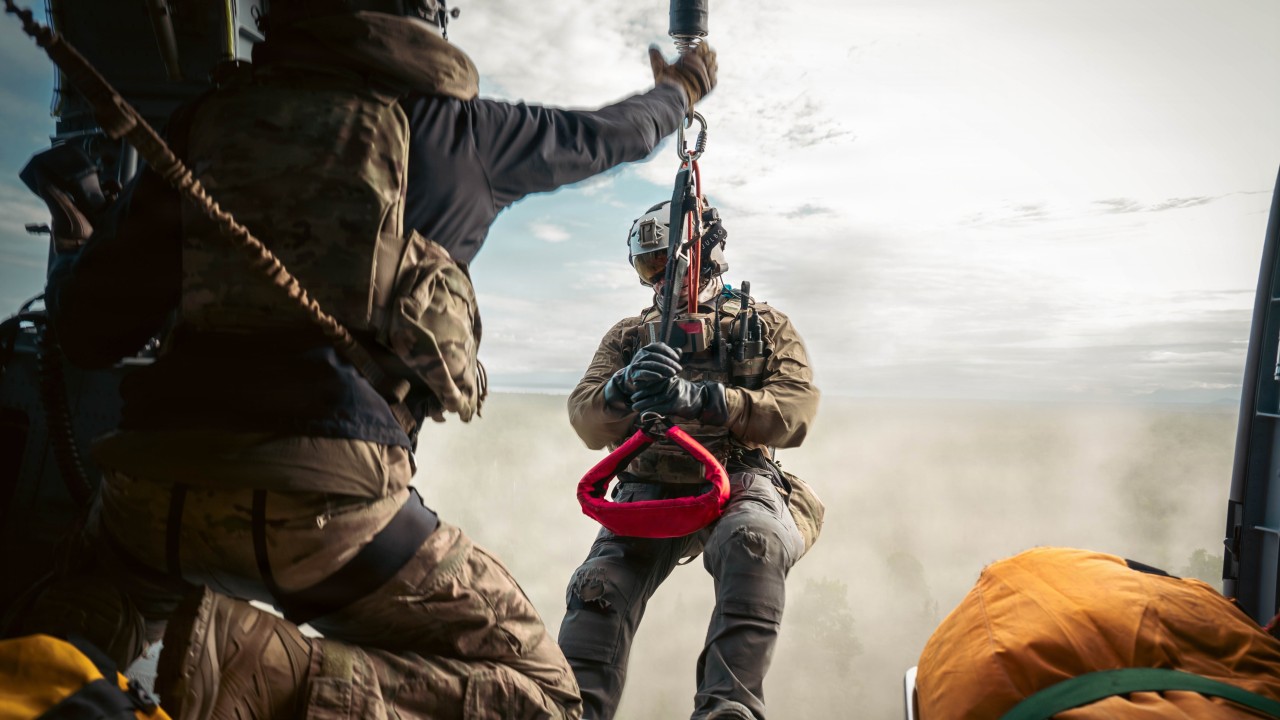
An Air Force pararescueman hoists from a HH-60W Jolly Green II during a simulated recovery operation on Joint Base Elmendorf-Richardson, June 17, 2026
This week, we explore rescues, rockets, and the Ring of Fire through:
- The Big Picture:Arctic Search and Rescue
- From the Field:TUNDRA MERLIN
- Lat & Long:56.65° N, 161.36° E
The Big Picture
Arctic Search and Rescue
Whether rescuing a lost civilian or extracting a downed pilot in a conflict zone, search and rescue is an inherently challenging mission, often conducted in austere environments sometimes with limited communications between the rescuers and the subject. The Arctic operating environment makes these challenges particularly pronounced. While the immediate value to rescued civilians is immeasurable, these real-world operations also enhance U.S. and Allied readiness for multi-domain Arctic operations.
To overcome environmental hazard with limited resources and infrastructure, search and rescue operations draw on a coalition of resources from local and national governments, the military, and non-governmental partners. In a recent example of this partnership, the Kingdom of Denmark announced a Maritime Domain Awareness Agreement with Air Greenland to support, among other missions, domain awareness and search and rescue. This agreement offers a model for sharing responsibility to meet mission needs. In the U.S. Arctic, a coalition of Coast Guard, National Guard, and local government assets shares the burden of search and rescue duties, often handling multiple rescue missions in a single weekend.
The capabilities honed in routine civilian search and rescue operations are foundational to high-stakes Combat Search and Rescue (CSAR) missions. The successful CSAR mission in Iran’s Alborz mountains earlier this year, which required coordination of over 150 aircraft, underscored the magnitude of personnel recovery during conflict. To prepare for such a scenario in the Arctic, the U.S. and Allied forces pair real-world civilian search and rescue demands with activities like U.S. Northern Command’s Exercise ARCTIC EDGE and NATO’s Cold Response.
Ultimately, every successful rescue begins with survival. For Arctic CSAR, combat is not the only complicating factor. There’s also the cold. To improve the chances of survivals in the Arctic, the U.S. Army 11th Airborne Division’s Northern Warfare Training Center equips warfighters with skills to operate in extreme cold. A recent successful summit of North America’s tallest peak by a Northern Warfare Center team demonstrated these specialized capabilities. By mastering Arctic survival and rescue, from individual skills to complex CSAR operations, U.S. and partner forces prepare to leave no one behind.
From the Field
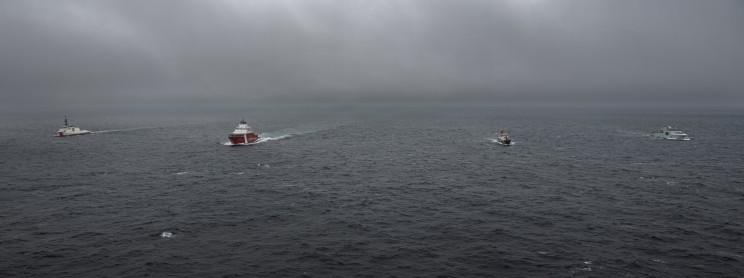
U.S. Coast Guard Cutters Munro, Storis, Fir and Royal Canadian Navy vessel HMCS Max Bernays sail alongside each other during Operation TUNDRA MERLIN in the Bering Sea, Alaska July 21, 2026.
TUNDRA MERLIN
U.S. and Canadian forces operated side-by-side in the Bering Sea this summer as part of Operation TUNDRA MERLIN. The combined sail covered 800 miles, contributing to the operation’s objectives to ensure defense of the U.S. homeland in Alaska and the Arctic-Pacific. Commander of Alaskan Command Lieutenant General Robert Davis says the operation “demonstrates the Joint Force’s ability to seamlessly integrate capabilities from multiple combatant commands and mission partners to deter and defeat potential threats in the region.” Activities on August 4 and 6 near Nome, Alaska successfully engaged a simulated target over 100 miles away with aircraft and the High Mobility Artillery Rocket System, delivered to Nome from Washington state via a Canadian C-17 Globemaster.
The Allied activity in the Arctic-Pacific comes as Chinese research ships transit the U.S. exclusive economic zone on their way to Arctic waters. Foreign vessels can legally transit the U.S. exclusive economic zone, but “the Coast Guard remains vigilant to ensure their activities comply with established international laws.” The arrival of the Chinese vessels has been a repeated occurrence each summer, but beginning last year, the Canadian military launched Operation Latitude to improve allied coordination and monitoring of northern waters.
Lat & Long
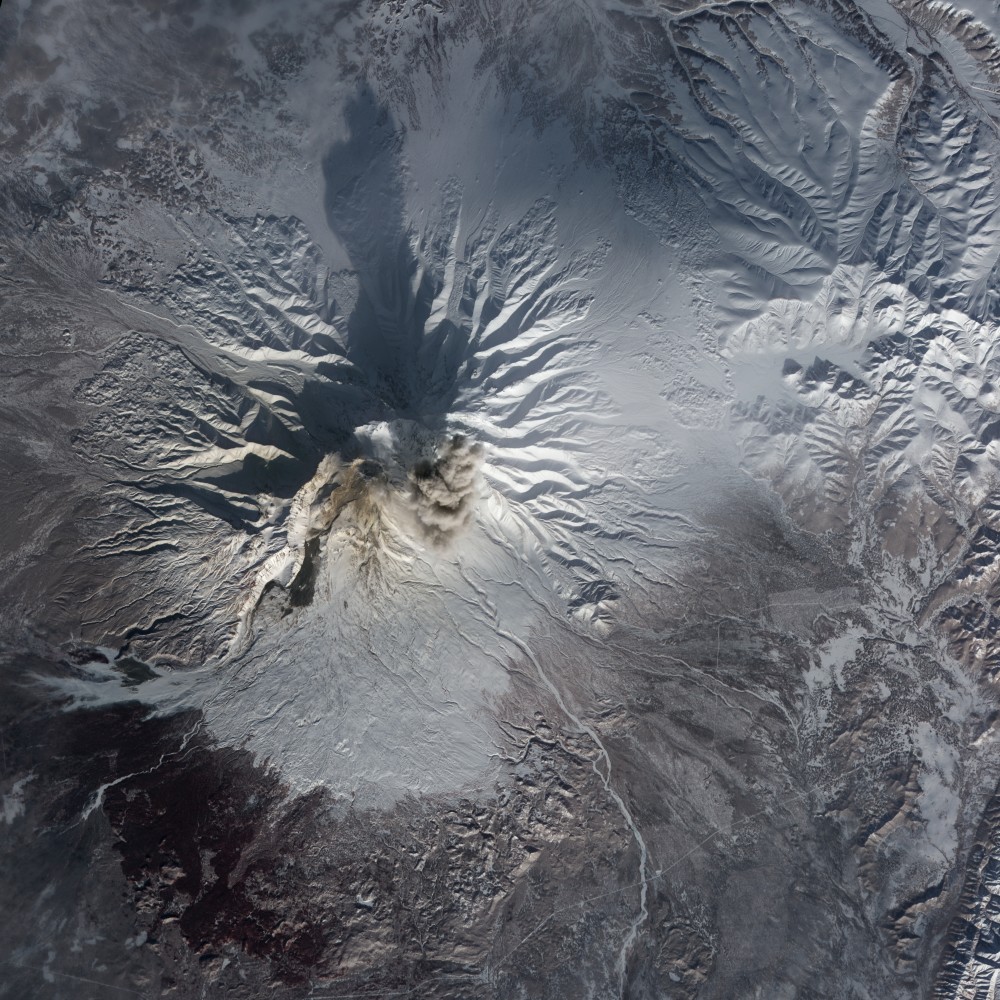
Mt. Shiveluch is among the largest and most active of the dozens of volcanoes that sit on the Kamchatka Peninsula in Russia’s Far East.
56.65° N, 161.36° E
While cold temperatures and darkness are well-known features of the Arctic operating environment, a recent geophysical event at these coordinates on Russia’s Kamchatka Peninsula highlighted another hazard of the Arctic and sub-Arctic operating environment. On July 21, Shiveluch Volcano on Russia’s Kamchatka Peninsula erupted, sending a cloud of volcanic ash into Alaskan airspace. The ash cloud impacted commercial flights to Nome, serving as a reminder of the U.S. Arctic’s proximity to the Ring of Fire.
As military activity in the Western Arctic increases, the risk of operational disruption due to volcanic activity remains a consideration. Historical examples, like the 1944 eruption of Mt. Vesuvius which destroyed nearly 100 Allied aircraft, highlight the magnitude of the hazard. Potentially hazardous volcanoes are scattered across Alaska, including one within 100 miles of Joint Base Elmendorf-Richardson, and represent just one of many demands of the Arctic operating environment.
That’s all for now. Stay tuned for the next update. In the meantime, follow the TSC on LinkedIn or check us out online.
Any views expressed in this newsletter do not reflect the offical policy or position of the Ted Stevens Center, Department of War (DoW), or the U.S. Government. The appearance of external hyperlinks does not constitute endorsement by the DoW of the linked websites or the information, products, or services contained therein. DoW does not exercise any editorial, security, or other control over the information you may find at these sites.