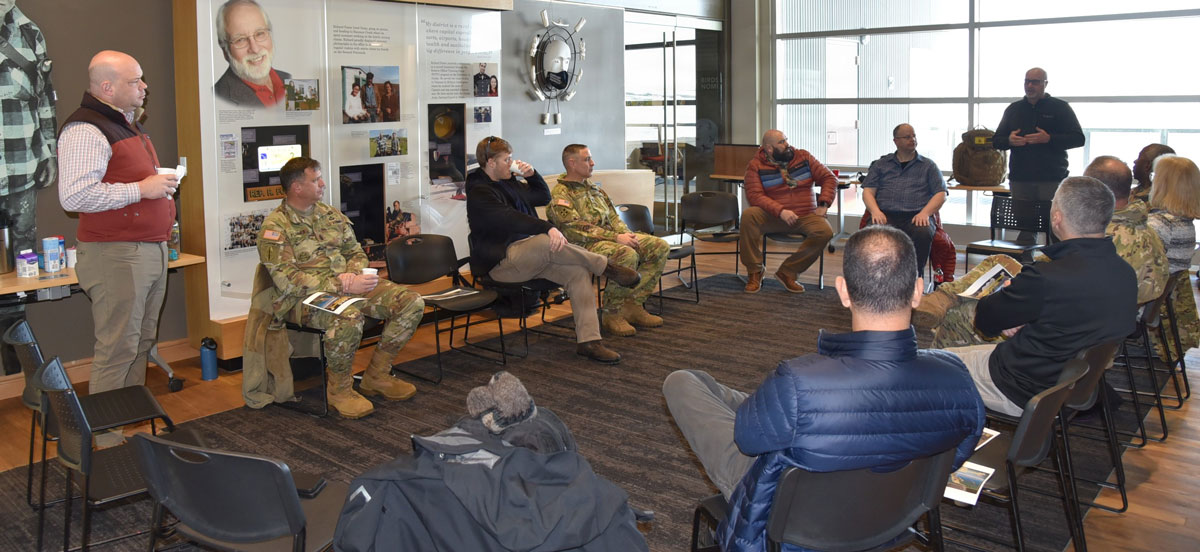
Adam Telle, Assistant Secretary of the Army for Civil Works, met with members of the Alaska District team to discuss the Port of Nome Modification Project on Mar. 25, 2026. (U.S. Army Corps of Engineers, Alaska District photo by Cameron McLeod)
NOME, ALASKA – Staff from the Ted Stevens Center for Arctic Security Studies conducted a focused field program in Nome to gain firsthand experience with the operational challenges and strategic opportunities in the North American Arctic. The one-day visit was designed to provide national-level defense and security personnel with a practical understanding of the region’s unique environmental, logistical, and infrastructural landscape, which cannot be fully replicated in a classroom setting. Throughout their visit, the delegation engaged with local experts and community leaders to better connect local conditions to matters of homeland defense, resilience, and deterrence.
A major focal point of the visit was the ongoing expansion of the Port of Nome, a project carrying significant national security implications. Port Director Joy Baker met with the delegation to brief them on the harbor’s development and its vital role in future northern operations. Addressing the strategic necessity of the project, Baker stated, “The deep-water port under construction at the Port of Nome is of strategic national importance, and will strengthen the United States’ presence in the Arctic by creating the necessary maritime infrastructure capacity required to refuel and resupply our national security fleet, while enhancing maritime domain awareness, and the readiness and deployment of these federal assets.”
Baker also highlighted the critical value of academic and strategic engagement institutions in driving these northern defense initiatives forward. “The Ted Stevens Center for Arctic Security Studies’ focus on advancing Arctic security, strategic understanding and international cooperation signifies the ongoing benefits that continue to be realized by the establishment of the Center,” Baker added. “The TSC has built a strong and effective team which will continue to translate Arctic security priorities into operational capability.”
Beyond the maritime infrastructure briefings, the group visited the Katirvik Cultural Center to learn about the region’s diverse peoples and cultures, met with the Alaska Army National Guard to discuss rescue operations, and held discussions at the University of Alaska Fairbanks Northwest Campus.
Ultimately, the field program successfully enhanced the staff’s understanding of how factors like distance, weather, and infrastructure directly impact Arctic operations, reinforcing the value of direct engagement between national security stakeholders and Arctic communities.