
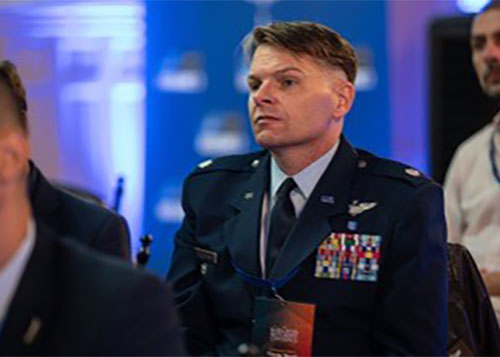
Lt. Col. Travis “Pred” Halleman, Chief, Nuclear Policy, Headquarters U.S. Air Forces Europe – Air Forces Africa Ramstein Air Base, Germany
I joined in 2004 following Operation Iraqi Freedom and wanted to do my part in the military to give back to the United States following the Events of 9/11. I have spent nearly my entire career with the nuclear enterprise. Ten years were spent at Minot Air Force Base, North Dakota where cold weather operations were normal as we figured out how to make things happen. As nuclear strike aircrew, we trained for strike operations and survival in the arctic environment that we knew was without mercy.The DoW Regional Security Centers are a tremendous opportunity that most military and civilian personnel do not utilize or even know exist. A fellow B52H colleague recommended the TSC program to me saying any of the courses would challenge my perspectives on NATO security and open doors to academic thought. Since April 2026, I have taken three courses: NATO in the North, Warfighter’s Arctic Foundations, and Arctic Warfare History Courses with the Multidomain Arctic Legal Course scheduled in November. These courses have provided me with a strategic perspective of our NATO Allies’ perceive an entire geographic area that was only “flyover territory.” Conversations and assignments sharpened my critical analysis skills used for joint military planning and allied coordination.
TSC has provided me with tremendous benefits. Most importantly though has been the professional and personal connections from around the world made from these classes. I have gained connections to people in defense and foreign ministries in United Kingdom, Sweden, Finland, Canada, Iceland, Germany, Netherlands, and United States. When there are questions surrounding certain subjects, I can connect with these subject matter experts in those nations to confirm planning factors and synergize efforts. This collaboration across these relationships provides one with additional fulfillment and excitement seeing your work take on another dimension.
In September 2026, I presented “A Shared Shield: Nuclear Deterrence for the 21st Century” at the Sarajevo Security Conference in Sarajevo, Bosnia. The presentation argued NATO Allies (both defense and foreign ministries) must accept the awful realities of nuclear war upon their own countries for nuclear deterrence and compellence to work. The room was full of not only public, private, and academic professionals, but the next generation leaders; all who were eager to listen to a topic they did not know much about. Individuals were shocked to hear such perspectives, but by the end of the presentation an appreciation for the challenge was accepted. There is additional education and understanding across the NATO Alliance in all matters related to nuclear operations and deterrence especially for the Northern Tier Allies’ concerns. Attendees were eager to learn more and understand these topics that have been quietly sidelined since the end of the Cold War.
An unintended consequence of the conference was connecting attendees to TSC. During one side discussion, a Danish Navy Lieutenant Commander who instructs at the Danish War College who was interested in the cognitive portion of nuclear deterrence. In our discussions, he expressed his interests and experiences in the Arctic. In the end, I connected him with TSC personnel so that there can be additional coordination for research and sharing.
These situations demonstrate the strength through partnerships and the vital importance of how we work with our NATO Allies and other partners to ensure our combined interests. TSC programs have enabled these collaborative events.
Between classes and engagements, as TSC alumni, the key is to stay engaged in conversations with those who have Strategic Studies interests. I have enjoyed the TSC Webinars that introduce topics from across the world and allow me to meet even more contacts across the world. Using LinkedIn, we all communicate to one another and share other webinars, classes, and conferences across the enterprise; all with the goal of improving policy and warfighting.