
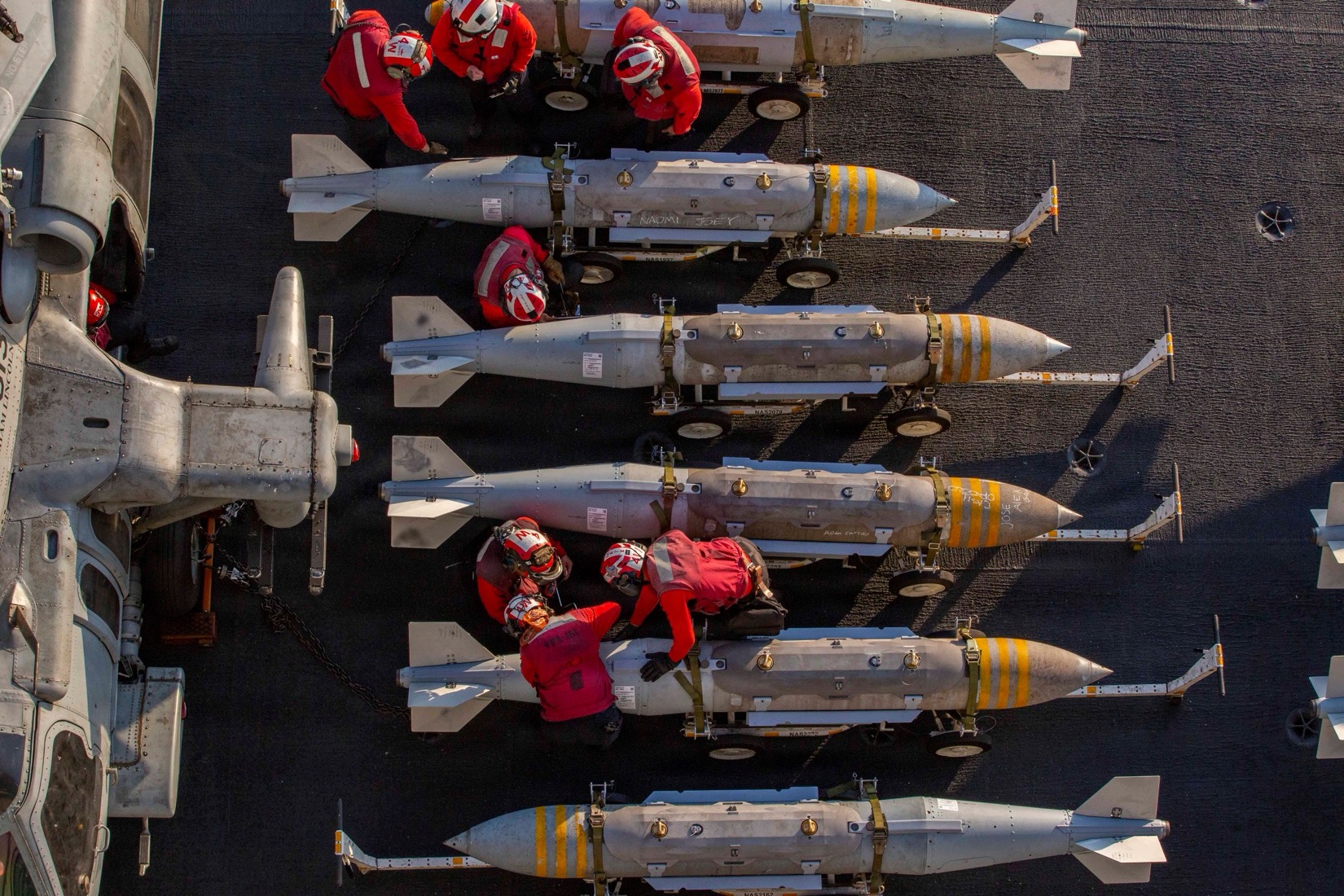
U.S. Sailors prepare to stage ordnance on the flight deck of Nimitz-class aircraft carrier USS Abraham Lincoln (CVN 72) in support of Operation Epic Fury, Feb. 28, 2026.
This week, we explore Laying the Groundwork for Epic Fury through:
- The Big Picture: First Moves
- From the Field: Tested by the North American Arctic
- This Week in History: Sinews of Peace
The Big Picture
First Moves
Over the weekend, the U.S. and Israel launched Operation Epic Fury, striking targets across Iran and killing the regime’s supreme leader, Ayatollah Ali Khamenei. The operation depended on “the largest regional concentration of American military firepower in a generation,” according to U.S. Central Command (CENTCOM). Before the first bomb dropped, though, U.S. forces targeted key enablers of Iran’s military response. According to Chair of the Joint Chiefs of Staff General Dan Caine, “the first movers were USCYBERCOM and USSPACECOM, layering non-kinetic effects, disrupting and degrading and blinding Iran’s ability to see, communicate and respond.” While these non-kinetic strikes created an opening for kinetic action, they also served as the opening salvo in a battle of contested logistics, aiming to cripple Iran’s ability to sustain a defense.
A similar battle over logistics would define future Arctic conflicts, but with a significant complication: U.S. and allied forces would be the ones facing a degraded logistical environment from the outset. Across the North American Arctic, enabling infrastructure suffers from a lack of redundancy. Sparse infrastructure and lower population density characterize the North American Arctic, often exposing domain awareness, communications, and logistics to single points of failure. In just one example of this fragility, multiple incidents of inadvertent damage to subsea cables have disrupted communications across the state of Alaska in recent years. These fragile systems could be the first targets of an adversary in a future Arctic conflict.
In the Arctic, the first mover isn’t necessarily the adversary. The threat to key infrastructure and logistics often comes from the operating environment itself. Exercises in the North American Arctic, like Joint Pacific Multinational Readiness Center (JPMRC) in Alaska, bring warfighters face to face with an operating environment that’s “contested” by default. During last year’s iteration, an avalanche across the highway blocked troop movements and delayed operations. During this year’s exercise, heavy snowfall posed challenges to snowmachines and wheeled vehicles alike. U.S. forces imposed a contested environment on Iran at the outset of Operation Epic Fury. In the Arctic, limited domain awareness, challenges to communications, and force movement obstacles are the default state, created by the elements even before the adversary acts.
Success in a future northern conflict may depend on the ability to overcome a doubly contested environment, where both the enemy and the elements threaten to sever the lifelines that enable military operations. The Ted Stevens Center for Arctic Security Studies develops warfighter understanding of these threats through its annual Arctic Contested Logistics Course. Registration is now open for the January 2027 iteration.
From the Field
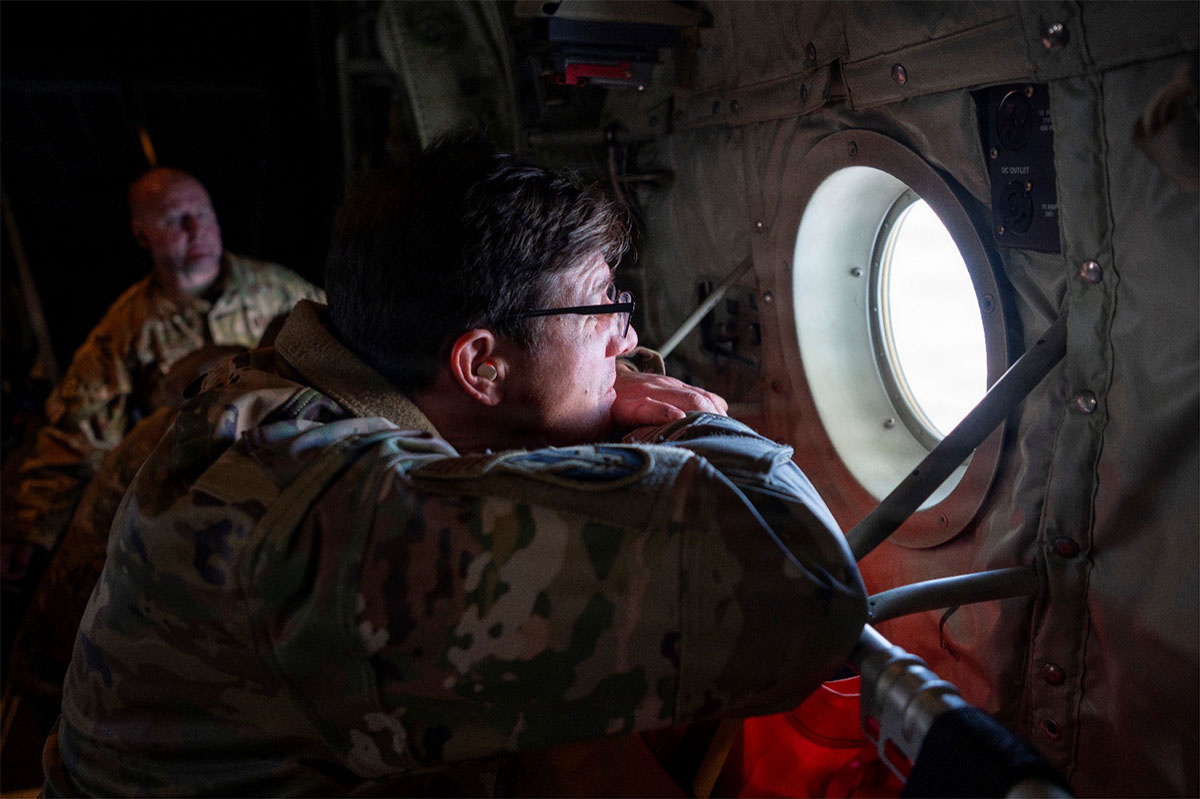
U.S. Air Force Capt. Kiley Gerritsen looks out the window during a simulated patient evacuation from Kodiak, Alaska back to Ted Stevens Anchorage International Airport during Exercise ARCTIC EDGE 2026.
Tested by the North American Arctic
In spite of its challenges, the North American Arctic remains a unique training ground to test U.S. and allied forces’ ability to overcome Arctic environmental operating hazards. Exercise ARCTIC EDGE 2026 (AE26) is already underway, testing joint and combined forces’ abilities to operate in the North. The North American Aerospace Defense Command and U.S. Northern Command exercise includes components through Alaska and Greenland.
This year, exercise planners focused on one particular aspect of Arctic logistics, critical infrastructure. One of AE26’s objectives is “coordination with State and Interagency partners on the protection of non-Department of War Critical Infrastructure”. By reinforcing coordination and hardening potential single-points-of-failure alongside interagency partners, AE26 aims to build U.S. and allied readiness and resilience required to sustain forces in a contested Arctic environment.
This Week in History
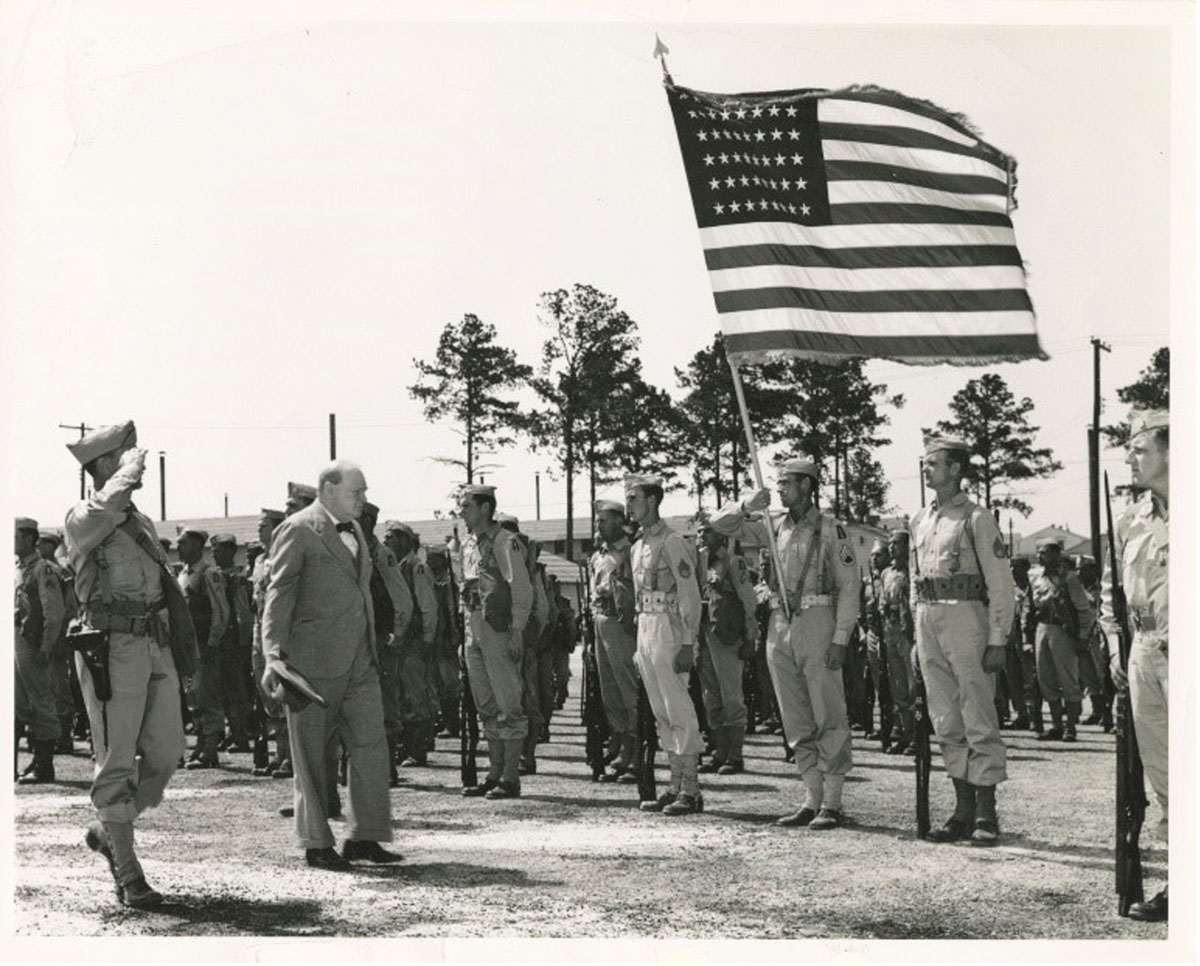
Prime Minister Winston Churchill inspects the honor guard for the 77th Infantry Division during his visit to Fort Jackson, June 24, 1942.
Sinews of Peace
80 years ago this week, United Kingdom Prime Minister Winston Churchill gave his famous speech considered by some to mark the beginning of the Cold War. While most remember Churchill’s description of the Soviet Union as “an iron curtain,” the speech actually focused on deterrence.
Even before conflict broke out, Churchill emphasized that peace is not passive. Rather, “the sinews of peace are laid in strength.” In 1946, this notion spurred Anglo-American partnership to collectively deter Soviet aggression, ultimately setting the conditions for the North Atlantic Treaty Organization’s formation three years later. Today, with the return of great power competition worldwide, Churchill’s message echoes through U.S. Department of War calls for “peace through strength.” In the Arctic, the U.S. and its allies forge “the sinews of peace” in part by building resilient systems and warfighters, prepared for the Arctic and the enemy.

Any views expressed in this newsletter do not reflect the offical policy or position of the Ted Stevens Center, Department of War (DoW), or the U.S. Government. The appearance of external hyperlinks does not constitute endorsement by the DoW of the linked websites or the information, products, or services contained therein. DoW does not exercise any editorial, security, or other control over the information you may find at these sites.