
February 2026 Arctic Chairs Meeting Readout
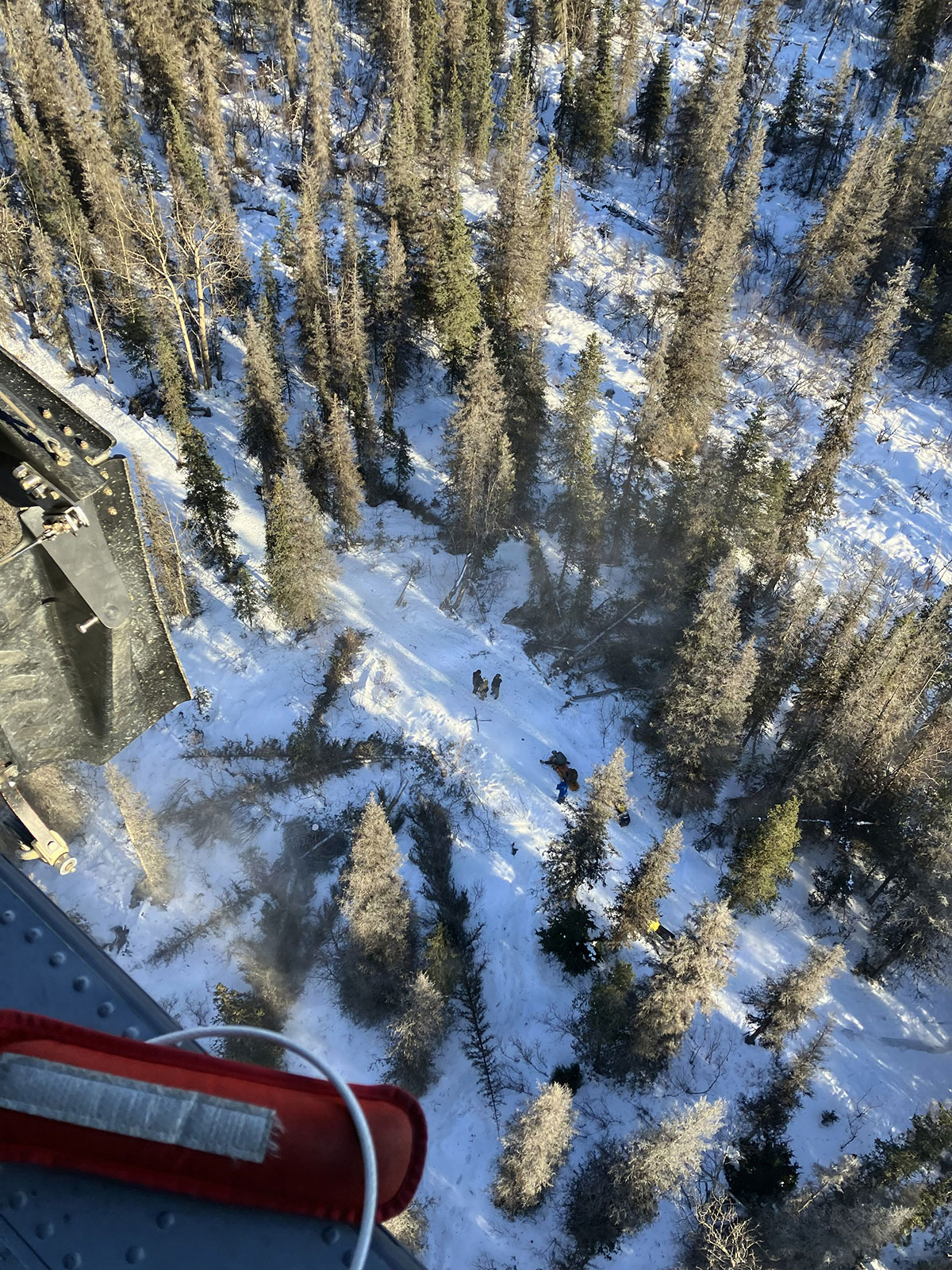
The Arctic Chairs meeting for February centered on the theme of civil search and rescue,i which naturally overlaps with the tactics, techniques, and procedures involving combat search and rescue,ii particularly within the harsh, Arctic environment. Major “Zach” Miller of the Alaska Army National Guard (AKNG), and the Arctic Defense Chair, provided a brief overview of his experience serving as the planningiii and operations officer for AKNG’s response to Typhoon Halong. Listed below are some lessons learned underscored by Major Miller for consideration by the Arctic Chairs.
- Tyranny of distance. Planners must contend with the tyranny of distancewithin an Arctic environment. The civil SAR operations during the AKNG’s response to Typhoon Halong underscored this reality to include the necessity to —
- Plan for long duration flight times to reach the point of impact.
- Conduct advanced planning to determine fuel requirements.
- Identify remote areas for landing zones.
- Preposition supplies for catastrophic events.
- Understand fuelivconsumption and power requirements.
- Time. Requirements involving time change.
- Immediate civil SAR. Immediate requirements will “condense” time. For example, rotary-wing aircrews will scramble to conduct numerous missions, all while coordinating with the ground combat element, that is, Soldiers on the ground. These same Soldiers are concurrently struggling themselves to extract civilians from destroyed and flooded buildings, without the support of critical infrastructure, itself destroyed, and with changing weather conditions, such as lower temperatures.
- Longer term civil SAR. Longer term civil SAR will transition to recovery operations. It will require the involvement of mortuary affairs, which itself will require further coordination with local authorities, religious leaders, and most importantly, traumatized families. Military and civilian SAR personnel will need to recognize that time will “slow” down for such families, who will consistently seek updates of their loved ones.
- Exercises. There is no substitute for an exercise!! It does not have to be large in scale, it can be conducted within limited budgets, but it must be conducted. An exercise will demonstrate challenges, from communications to equipment, time constraints, and logistical requirements that a workshop or tabletop simply cannot duplicate. Exercise your plan of action prior to an event in the field.
- Unmanned Aircraft Systems (UAS). Leverage the capabilities for UASs to assist in civil SAR and real time data collection, e.g., images of road(s) and road(s) conditions, and data sharing. To that end, leverage artificial intelligencefor data collection to truncate time requirements, with the goal of informing command and control elements to expedite the decision-making process. Despite the advantages that technology provides, the overarching consensus was that there was no substitute for human interaction. Meaning, your subject matter experts must be in the same room.
The Arctic Chairs concurred with the challenges Major Miller emphasized, adding to those the need for investment in SAR capabilities, the need to understand the navigation challenges involving the Arctic sea lines of communication, and the necessity to plan for mass causality events on the high seas. Regarding the latter, an Arctic Chair discussed his personal involvement in the response to the sinking of the ferry MS Estonia, due to a structural failure, in the Baltic Sea on 28 September 1994, resulting in 852 deaths from drowning and hyperthermia. The ship sank quickly, within 15 minutes, under severe weather conditions and rough seas. Despite this, civil SAR efforts, to include those involving nearby ships and rotary-wing aircraft, rescued dozens of survivors.
Below are suggested readings:
See Petty Officer 1st Class Abigayle Lutz, “Navy Medical Teams Test Life-Saving Capabilities During Exercise ARCTIC EDGE 26,” Defense Visual Information Distribution Service (DVIDS) (02FEB26), https://www.dvidshub.net/news/559161/navy-medical-teams-test-life-saving-capabilities-during-exercise-arctic-edge-26
See Poul Grooss, The Naval War in the Baltic: 1939 – 1945 (Great Britain: Seaforth Publishing, 2017), Chapter 9, “New Year 1944/45 to the End of the War – Month by Month” pages 289 to 294, subsection, “The World’s Greatest Shipwreck: MV Wilhelm Gustloff.” Note: This is an English translation. Mr. Grooss’ book was first published in 2014 in Denmark under the title, Krigen I Østersøen 1939-1945.
This is worthwhile to reference as adversaries in the past, and adversaries confronting the allies and partners within the North Atlantic Treaty Organization (NATO) today, have demonstrated little remorse in targeting civilians. In this instance, the S-13, a Soviet submarine, targeted and sank the MV Wilhelm Gustloff in the Baltic Sea. The MV Wilhelm Gustloff was part of a convoy, itself requiring icebreakers, evacuating civilians from East Prussia as the Red Army advanced west through the Baltic nations in January 1945. Estimates vary, given the difficulty in accounting for the number of refugees, but thousands died when the ship sank, either outright, or in the icy waters of the Baltic Sea, succumbing to hypothermia.
This tragedy, as with the MS Estonia referenced above, underscores the overarching theme identified by the Arctic Chairs and that is the necessity to ensure for robust civil SAR and CSAR capabilities. Success requires continuous investment in planning, training, and collaboration, as emphasized by Arctic Chair Major Miller. This necessity exists from the Baltic Sea to the High North to the Bering Strait, and across the multiple Arctic sea line of communications. The commonality remains: the tyranny of distance, combined with limited time, is a death sentence, and remains equally challenging now as it was during the Second World War.
The TSC’s National and Arctic Interest Chairs program integrates national Arctic security networks as well as distinguished subject matter experts to advance a common understanding of and best practices for Arctic security and defense. The Chairs include representatives from Norway, Sweden, and Canada as well as Chairs from the U.S. Coast Guard, Alaska National Guard, NOAA and Chairs for Energy & Economics as well as Polar Governance.