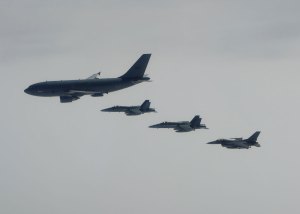
In 1942, on the eve of the Japanese occupation in Alaska, and despite security concerns in Western Canada, four Royal Canadian Air Force squadrons began operations in Alaska. Availability of military air assets in Alaska was so dire that the four squadrons immediately made up twenty five percent of them. By the end of the Aleutian Campaign, 500 RCAF personnel, 5,000 Canadian Army soldiers, 700 Canadians in the binational First Special Service Force, and crews of Canadian armed merchant vessels and corvettes all served in defense of Alaska.1 Thus began a longstanding and unique security cooperation partnership. Its evolution through Cold War Arctic exigencies in Alaska resonates with contemporary Arctic security conundrums. Constructed on mutual respect and shared values, a desire to optimize defense and deterrence capabilities for the homeland, and genuine comradery, the legacy of Canadian American security cooperation in Alaska demonstrated a deep level of trust and collaboration to achieve mutual defense goals.