
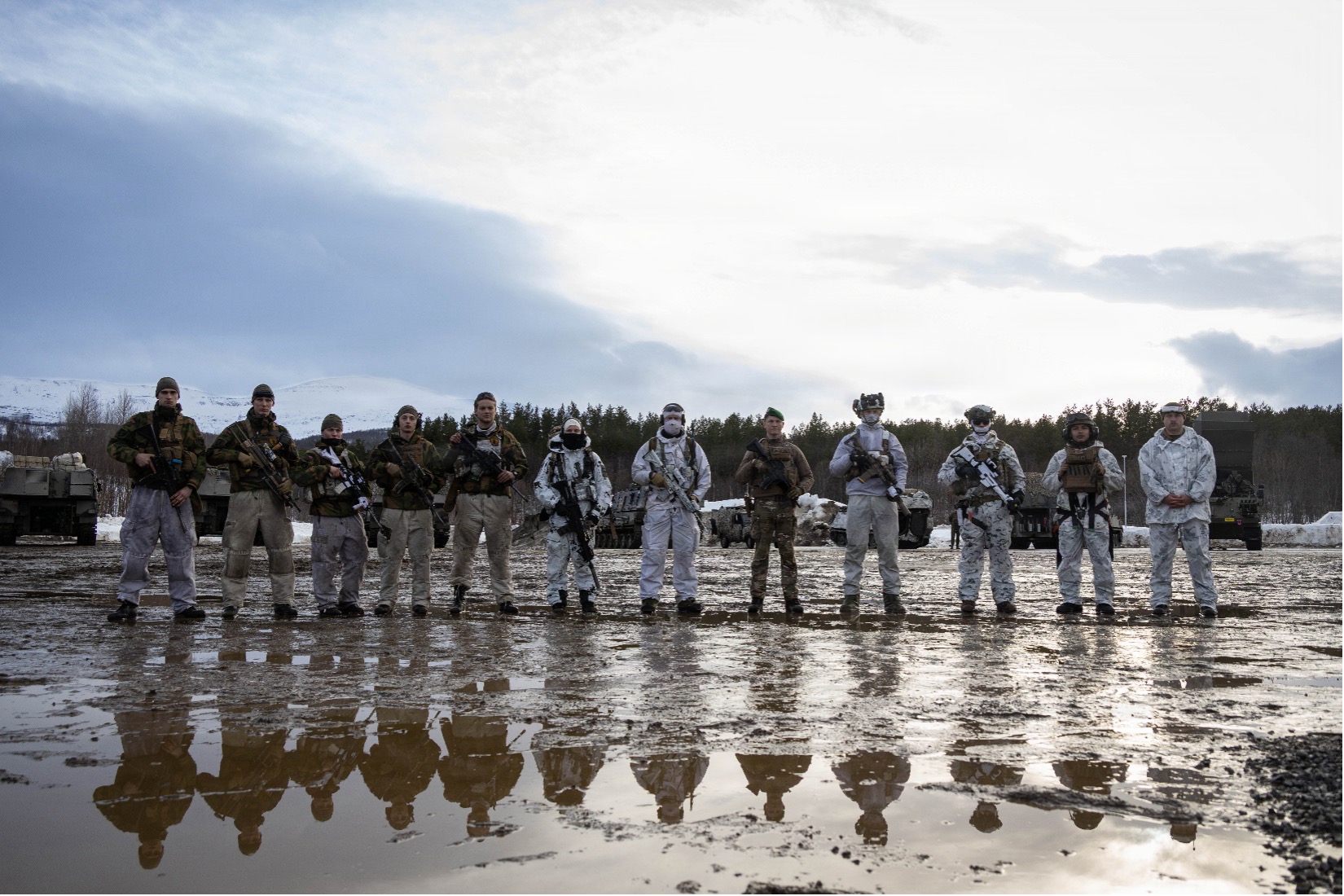
NATO allies pose for a photo during NATO Secretary General Mark Rutte’s visit to Setermoen, Norway, March 18, 2026. The visit highlighted the strength of NATO’s joint force, demonstrating operational capabilities in an Arctic environment.
This week, we explore NATO’s Arctic fighting force through:
- The Big Picture: The Summit & the Arctic
- By the Numbers: Ramstein Flag
- From the Field: Sweden’s New Arctic Strategy
The Big Picture
The Summit & The Arctic
Much of Arctic warfare’s history was written in the European High North. Conflicts like the Winter War and Liberation of Finnmark taught the Nordics important Arctic operational lessons. Today, following the accession of Sweden and Finland to the Alliance, this history informs NATO’s Arctic planning in the European theater and the circumpolar North more broadly. Accordingly, NATO has recognized the Arctic’s “growing strategic importance,” making it likely Arctic issues will appear on the agenda at next month’s NATO summit in Turkey.
NATO summits bring leadership from the Alliance’s member countries together to discuss key issues and provide strategic direction. At last year’s summit, the allies agreed to boost defense spending over the next 10 years. This commitment catalyzed investment and activity across the Arctic, with the subsequent launch of enhanced vigilance activity Arctic Sentry further cementing NATO’s focus on the North. The Arctic is less a barrier than a “vital link” connecting the Alliance across the Atlantic. Joint statements and tangible trans-atlantic security cooperation, like the Canadian Rangers’ knowledge sharing efforts, have reinforced this link.
At this year’s summit, leaders will focus on tangible actions to leverage the bigger budget, with implications for the next steps to build on Arctic Sentry’s platform of coordination. At the strategic level, this could look like the Canadian foreign minister’s proposed comprehensive NATO Arctic Strategy. Other topics at the summit could include the integration of additional resources into existing activities and new initiatives to accelerate innovation and enhance capabilities. The action items that come out of the summit will aim to translate cash into capabilities, shaping the Alliance’s northern flank and the Arctic more broadly.
From the Field
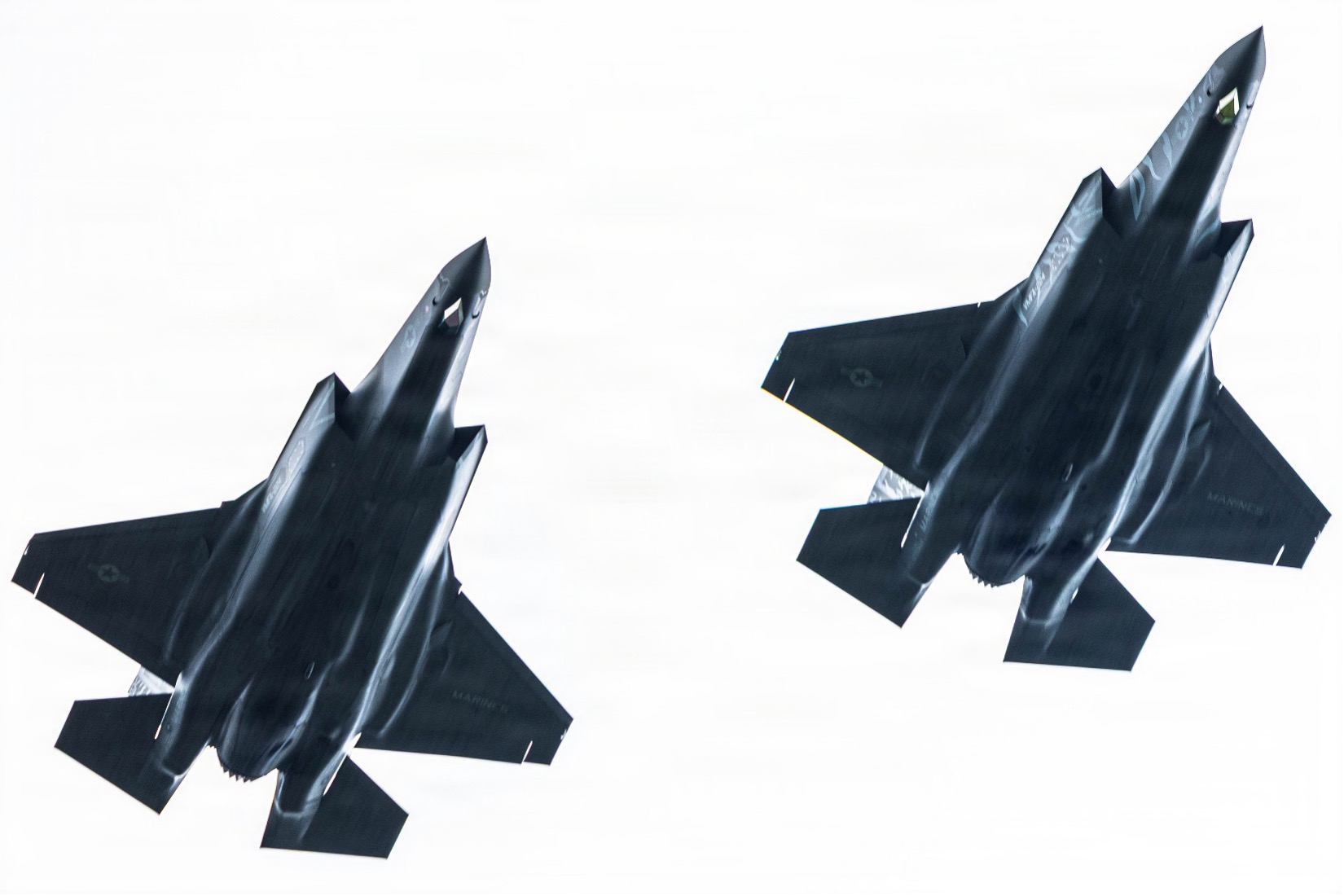
Two U.S. Marine Corps F-35B Lightning II aircraft fly overhead during exercise Ramstein Flag 2026 in Tervo, Finland, June 10, 2026.
Ramstein Flag
This week will close out the third iteration of Ramstein Flag, a NATO Allied Air Command multidomain exercise. The 2026 exercise is NATO’s largest air exercise. Simultaneous operations spanning from Northern Norway to Southern Spain prepare allied forces to respond in an Article 5 scenario. While 19 countries are participating, Denmark, Finland, Norway, and Sweden are jointly leading the northern component.
Coordination for this historic exercise centers just above the Arctic Circle, at the Combined Air Operations Center (CAOC) in Bodø, Norway. CAOC Bodø is NATO’s third and newest regional air operations center, handling its first live mission in October 2025. Ramstein Flag is not CAOC Bodø’s first major exercise, though. The CAOC also played a leading role in air operations during the 2026 execution of Exercise Cold Response. Through its coordination of Ramstein Flag, CAOC Bodø enabled NATO air forces to test their capabilities, contributing to the Alliance’s deterrence and defense.
From the Diplomatic Desk
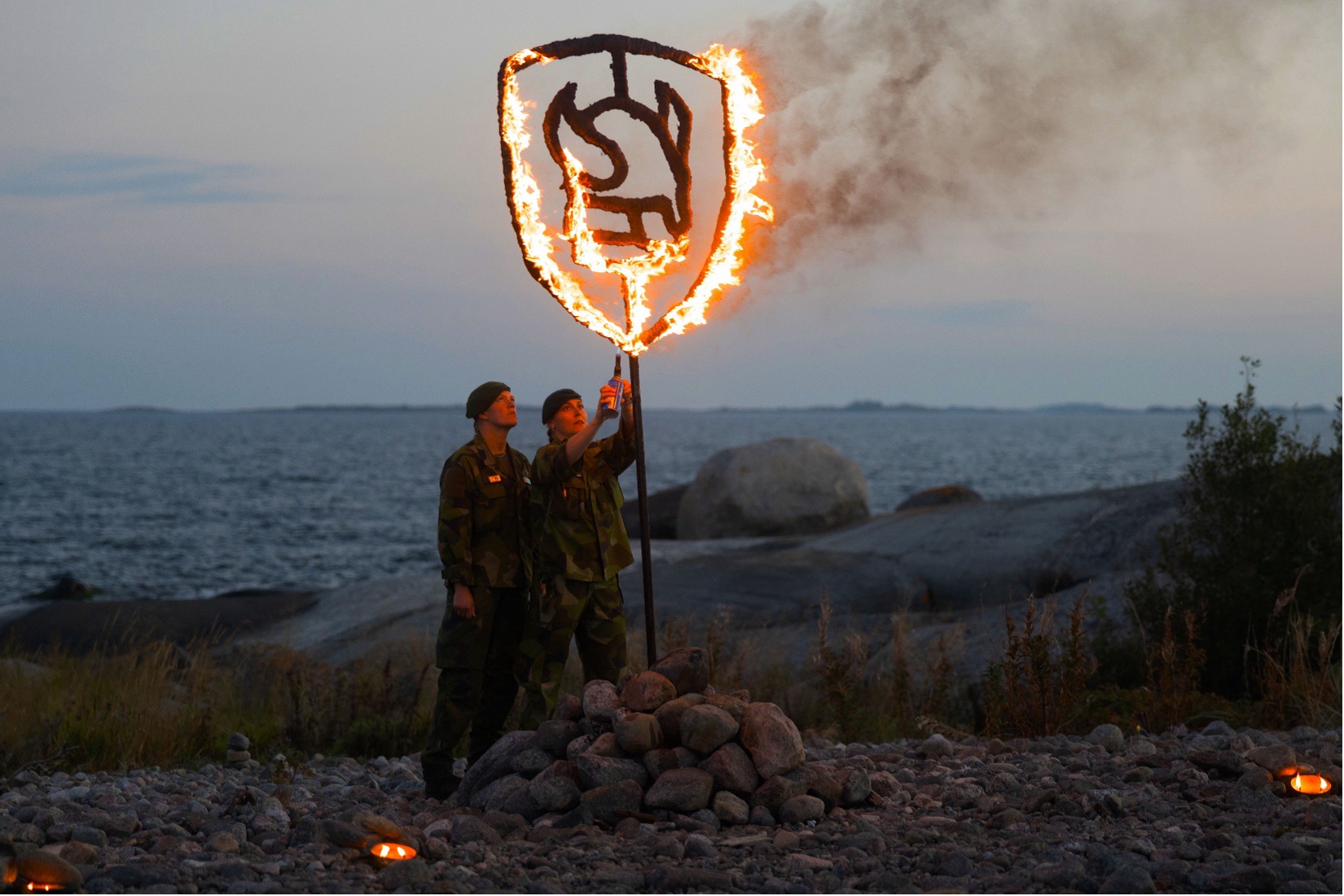
Swedish Marines burn the Torleif, the regimental symbol of the Swedish Marines, during Viking Night, a ceremony held to conclude Exercise Archipelago Endeavor 2025 in Korso, Sweden, Sept. 9, 2025.
Sweden’s New Arctic Strategy
As one of NATO’s newest members, Sweden has released an updated Arctic strategy that recognizes new security dynamics. While maintaining a whole-of-government approach, the document significantly amplifies defense priorities compared to its 2020 predecessor, driven by the war in Ukraine and the nation’s recent NATO accession. The document formally acknowledges Sweden’s responsibility as an Arctic nation to bolster Northern deterrence and defense, signaling Sweden’s readiness to augment NATO’s Arctic capabilities. The release of the new strategy comes just a few weeks ahead of the NATO summit. As Alliance leaders prepare to operationalize their defense commitments, Sweden’s Arctic strategy demonstrates commitment to the course.
That’s all for now. Stay tuned for the next update. In the meantime, follow the TSC on LinkedIn or check us out online.

Any views expressed in this newsletter do not reflect the offical policy or position of the Ted Stevens Center, Department of War (DoW), or the U.S. Government. The appearance of external hyperlinks does not constitute endorsement by the DoW of the linked websites or the information, products, or services contained therein. DoW does not exercise any editorial, security, or other control over the information you may find at these sites.