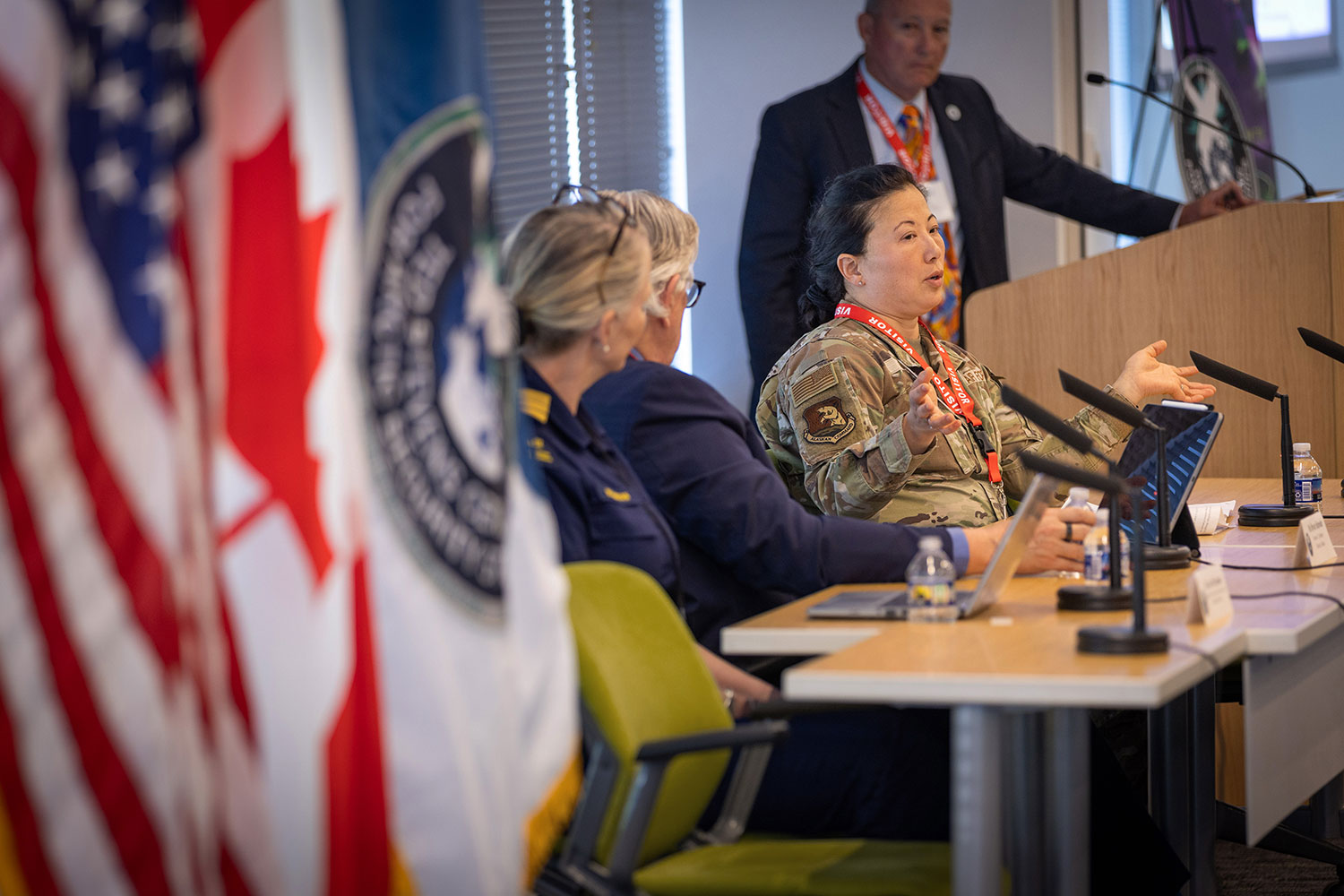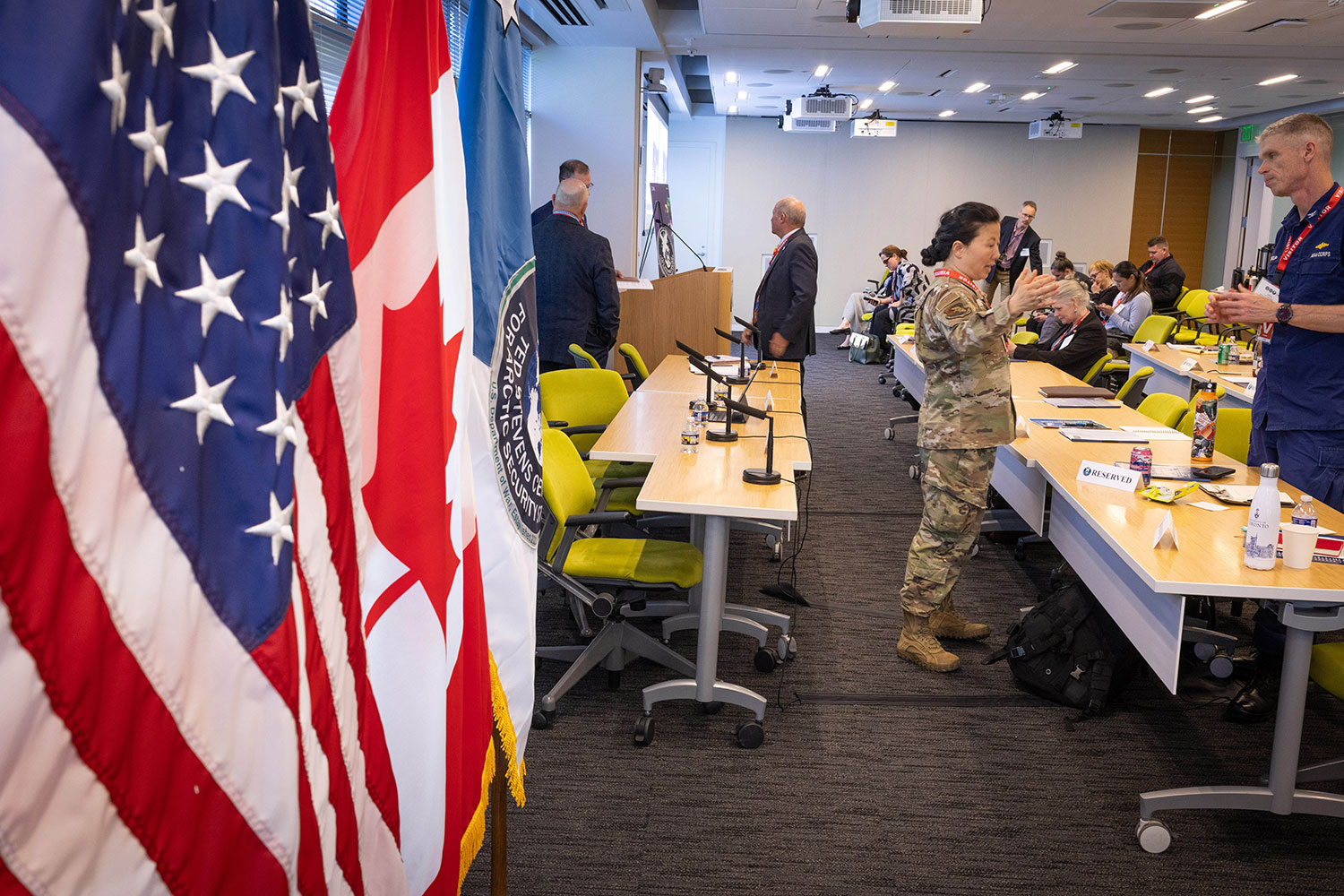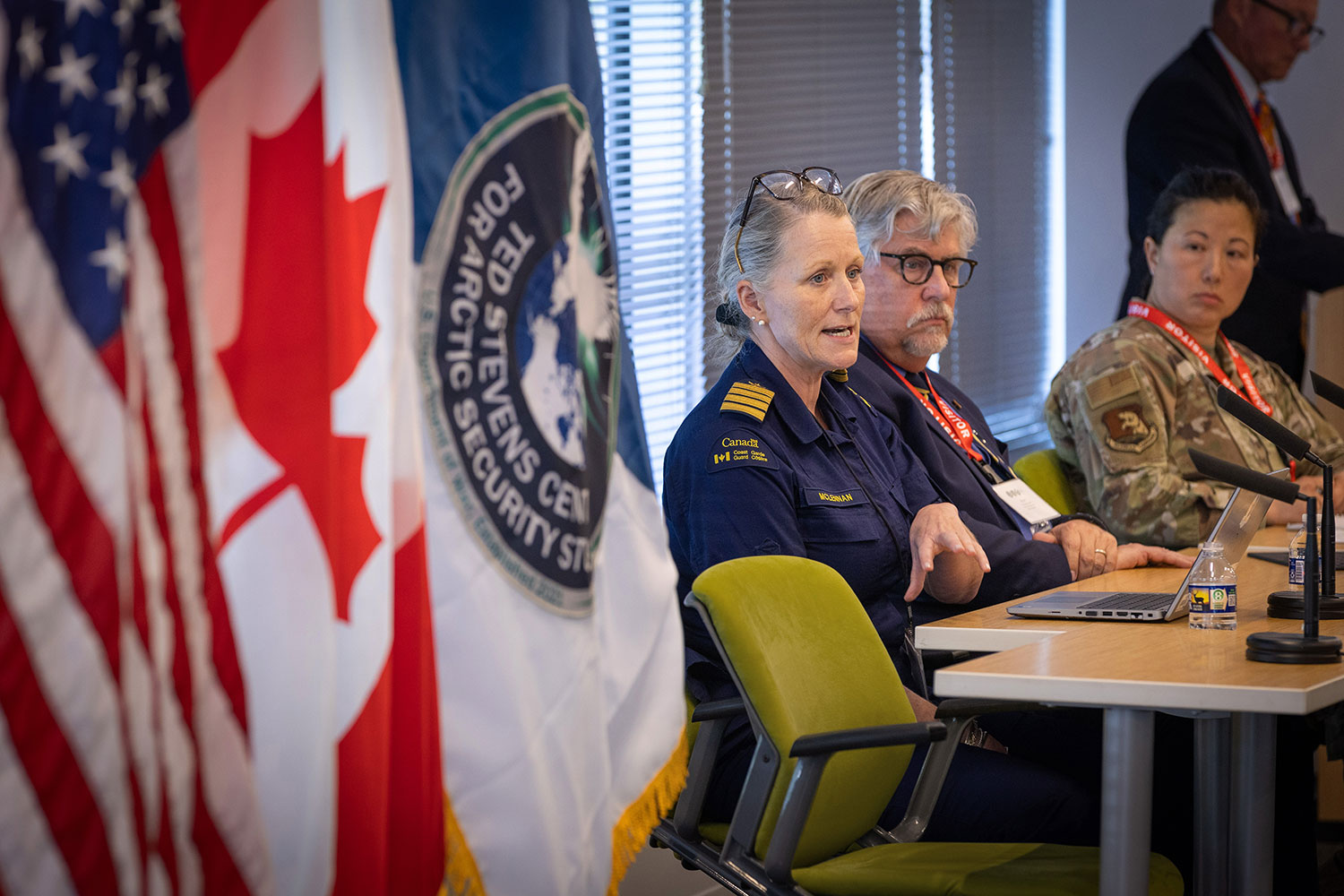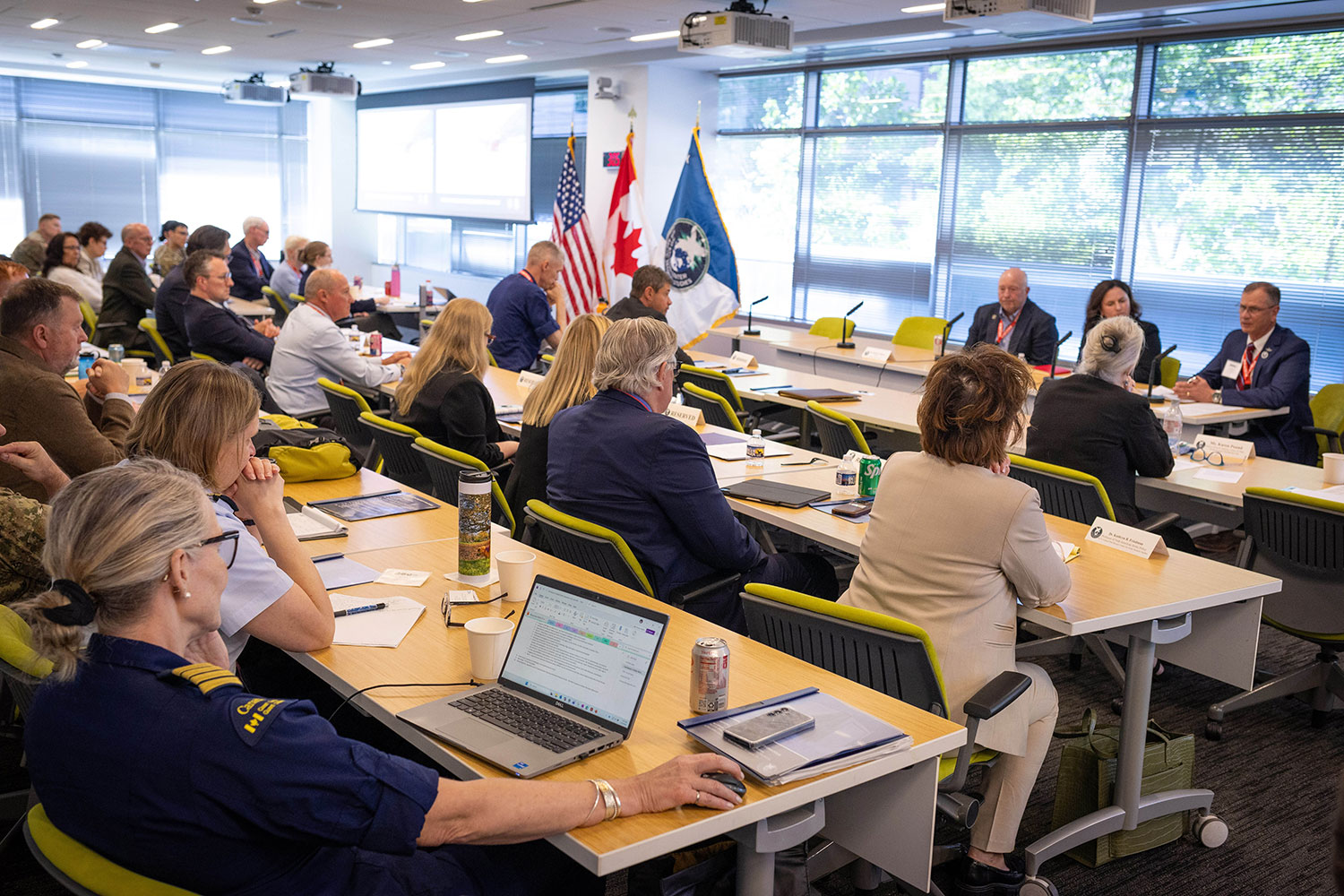
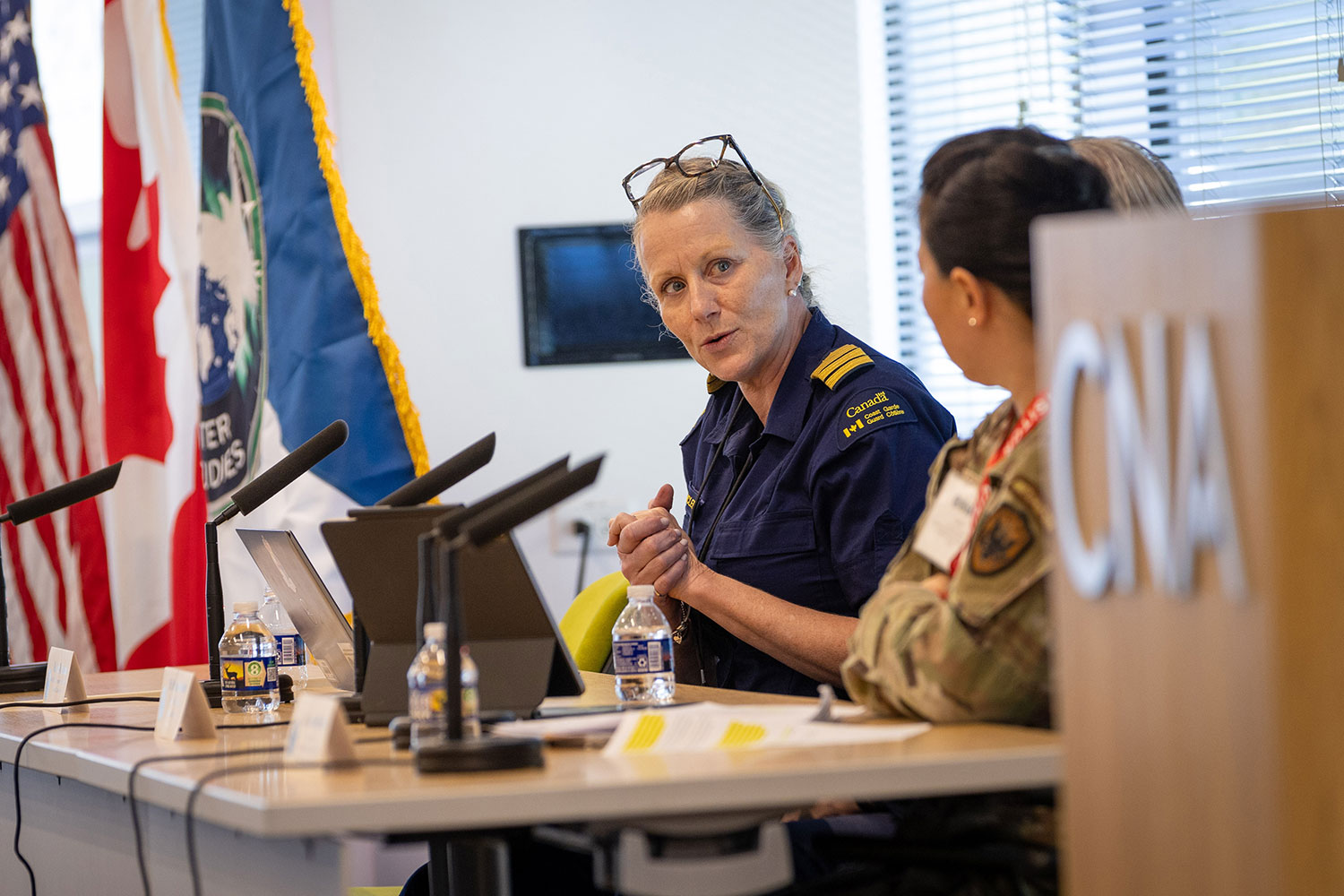
Defense and security leaders from the United States and Canada convened on May 18 for the 2026 North American Arctic Security Dialogue (NAASD), a forum focused on strengthening cooperation in the rapidly evolving Arctic security environment. Hosted by the Ted Stevens Center, this year’s dialogue brought together military practitioners, policymakers, researchers, and Arctic experts to examine the capabilities, partnerships, and priorities required to ensure effective deterrence and defense across the North American Arctic.
Held in conjunction with the North American Aerospace Defense Command (NORAD) and U.S. Northern Command’s VISTA AURORA Tabletop Exercise, the one-day academic dialogue examined emerging defense and security challenges across the North American Arctic and their implications for homeland and continental defense.
Opening the event, Ted Stevens Center Director Maj. Gen. (ret.) Randy “Church” Kee provided a geostrategic assessment of Arctic security challenges posed by Russia and China, emphasizing the growing importance of the Arctic to homeland defense and international security.
“This dialogue underscores the importance of trust and cooperation between the United States and Canada in maintaining a credible Arctic defense posture,” said Maj. Gen. (ret.) Randy Kee, Director the Ted Stevens Center for Arctic Security Studies. “I am honored to join these professionals to discuss stronger interoperability, persistent regional presence, and enhanced domain awareness. Together we will identify essential components for future arctic security planning.”
The dialogue featured keynote presentations from senior leaders representing the North American Aerospace Defense Command (NORAD), U.S. Northern Command, and the Canadian Armed Forces. Discussions focused on the importance of burden sharing, operational readiness, and maintaining a credible defense posture across the continent’s northern approaches.
A key theme of the dialogue was the Arctic environment itself as a growing defense challenge. Officials noted that vast distances, severe weather, ice conditions, and limited infrastructure continue to complicate military movement, response efforts, and sustainment operations.
Participants emphasized the need for improved Arctic mapping, weather forecasting, communications, and domain awareness systems to create a shared operational picture across the region. Throughout the day, participants examined the unique challenges of operating in the Arctic environment. Sessions addressed logistics and communications limitations, infrastructure and energy vulnerabilities, gray-zone threats, information operations, and the complexities of conducting search-and-rescue missions across vast and remote Arctic regions.
Panel discussions brought together experts from NORAD and U.S. Northern Command, the Canadian Joint Operations Command, the U.S. Arctic Research Commission, the Canadian Coast Guard, the Irregular Warfare Center, and other organizations to identify practical opportunities for enhanced cooperation.
As the Arctic continues to gain strategic significance, the North American Arctic Security Dialogue serves as a platform for strengthening relationships, generating actionable insights, and ensuring the United States and Canada remain prepared to address emerging challenges together.
The Ted Stevens Center for Arctic Security Studies strengthens national, allied, and partner capabilities by cultivating regional expertise, building durable networks, and generating actionable insight for the warfighter. TSC is the Department of War’s premier institution dedicated to Arctic-focused education, engagement, and research, empowering today’s practitioners and preparing tomorrow’s strategic leaders.