
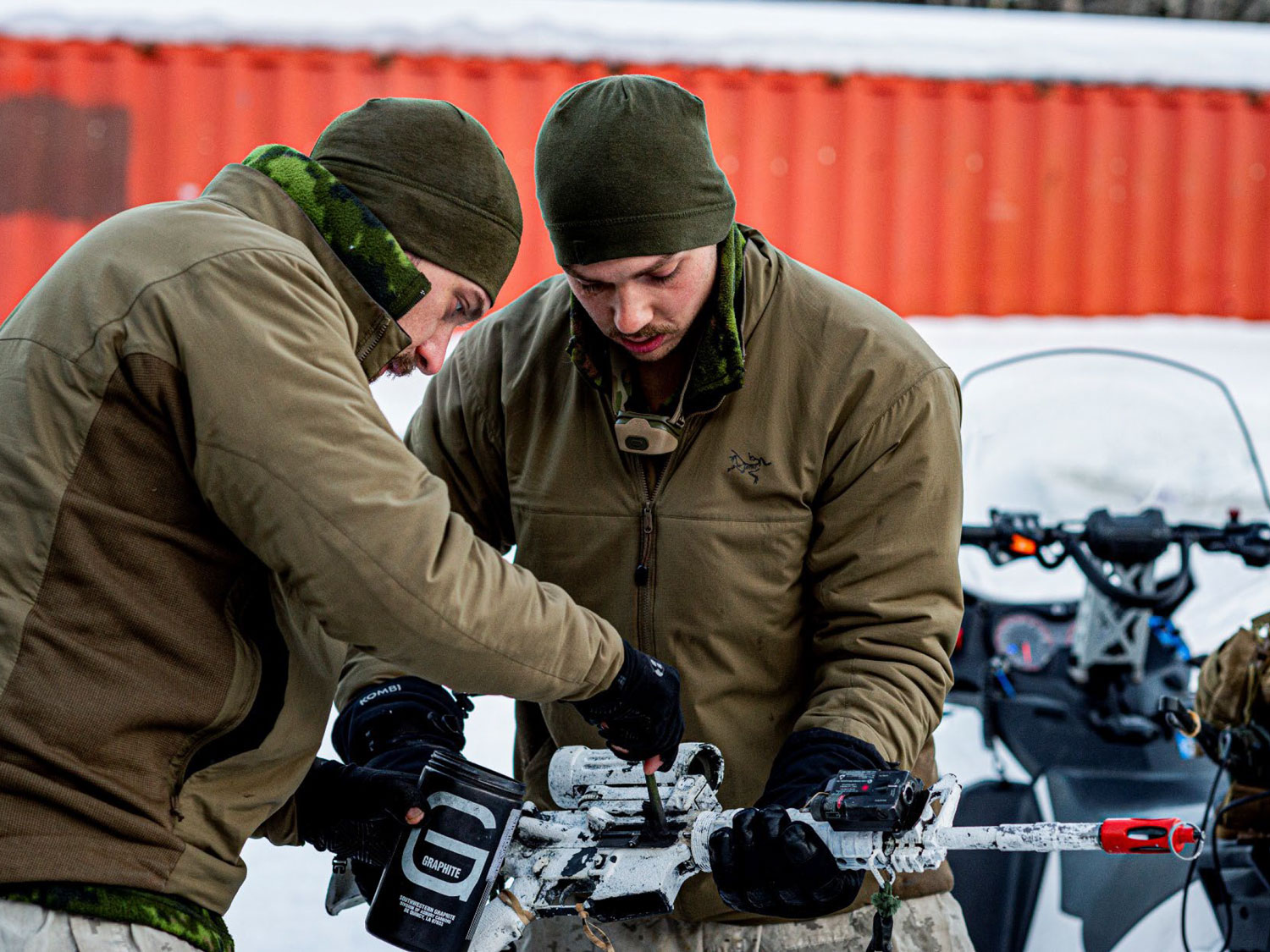
Soldiers from the Canadian Army apply graphite lubricant to keep their rifles functioning in cold weather as they prepare to conduct a reconnaissance mission in the training area of Fort Greely AK, on March 13, 2022.
This week, we explore critical minerals and the Arctic through:
- The Big Picture: Supply Chain Challenges and the Arctic Answer
- By the Numbers:U.S. Critical Minerals Posture
- From the Field: Sword 26
The Big Picture
Supply Chain Challenges and the Arctic Answer
What do the Svalbard Treaty and the Organization of the Petroleum Exporting Countries (OPEC) have in common? For a few days in April 2026, the United Arab Emirates (UAE) was part of both. Those days ended, though, on April 28 when the UAE left OPEC. OPEC coordinates production of over one-third of global oil, giving it leverage over the geographically concentrated supply. Like oil, other geographically concentrated resources characterized by inelastic global demand and long project time horizons enable political leverage.
Critical mineral “supply chains are among the most geographically concentrated of any global industry,” centered on China’s mining and processing capacity. Assistant Secretary of War for Industrial Base Policy Michael P. Cadenazzi Jr. called reliance on China for critical minerals a “strategic vulnerability of the highest order” given their necessity for defense systems. In 2025, China responded to U.S. tariffs with export controls on rare earth elements. While the controls were later loosened, the U.S., allies and partners continue to seek out new ways to ensure access.
One place the U.S. is looking for critical minerals is the North. In the European Arctic, Finland offers “the richest deposits of critical minerals in Europe” and the ice-capable shipping expertise to move materials from the ground to processing and manufacturing sites. In the North American Arctic, Canada exports 22 critical minerals to the U.S. and future supplies could potentially meet 100 percent of U.S. rare earth element demand. Greenland ranks eighth worldwide for rare earth reserves, and though production has not yet started, exploration activities continue. In the U.S., Alaska holds 23% of federal land open to mining and 49 of 50 critical minerals. To bolster domestic supply, the DOW, White House and broader interagency are developing each link in the chain, from extraction to supporting infrastructure.
Critical minerals are only the latest supply chain vulnerability to reshape the North. When the 1973 oil embargo triggered an economic crisis, one of Congress’ answers was the passage of the Trans-Alaska Pipeline Authorization Act that same year, reshaping America’s Arctic state physically and economically. The Arctic answer to the critical minerals challenge could bring similarly transformative change. More news could come next week, as U.S. President Donald Trump travels to Beijing for talks with Chinese President Xi Jinping that could include critical minerals.
By the Numbers
Given the current supply chain, the U.S. cannot build, maintain, or field modern weapons without minerals largely controlled by China. Critical minerals, including rare earth elements, lithium, cobalt, manganese, nickel, tungsten, and others, underpin virtually every modern defense platform, from advanced electronics and guidance systems to propulsion, energy storage, and communications infrastructure. The top priorities of the National Defense Strategy, including homeland defense and deterring China in the Indo-Pacific, depend on the availability of these platforms, and therefore on the availability of these minerals. A few statistics highlight the vulnerability of the U.S. critical minerals posture:
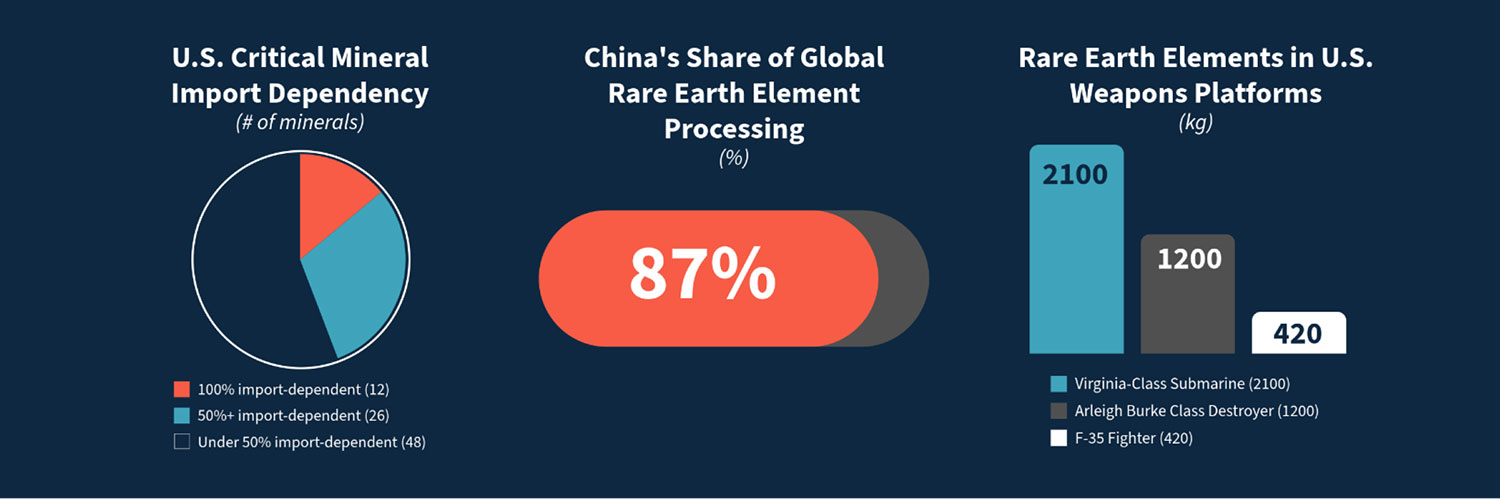
Sources: DoD Critical Minerals Strategy | USGS Mineral Commodity Summaries 2025 | Congressional Research Service | CSIS
From the Field
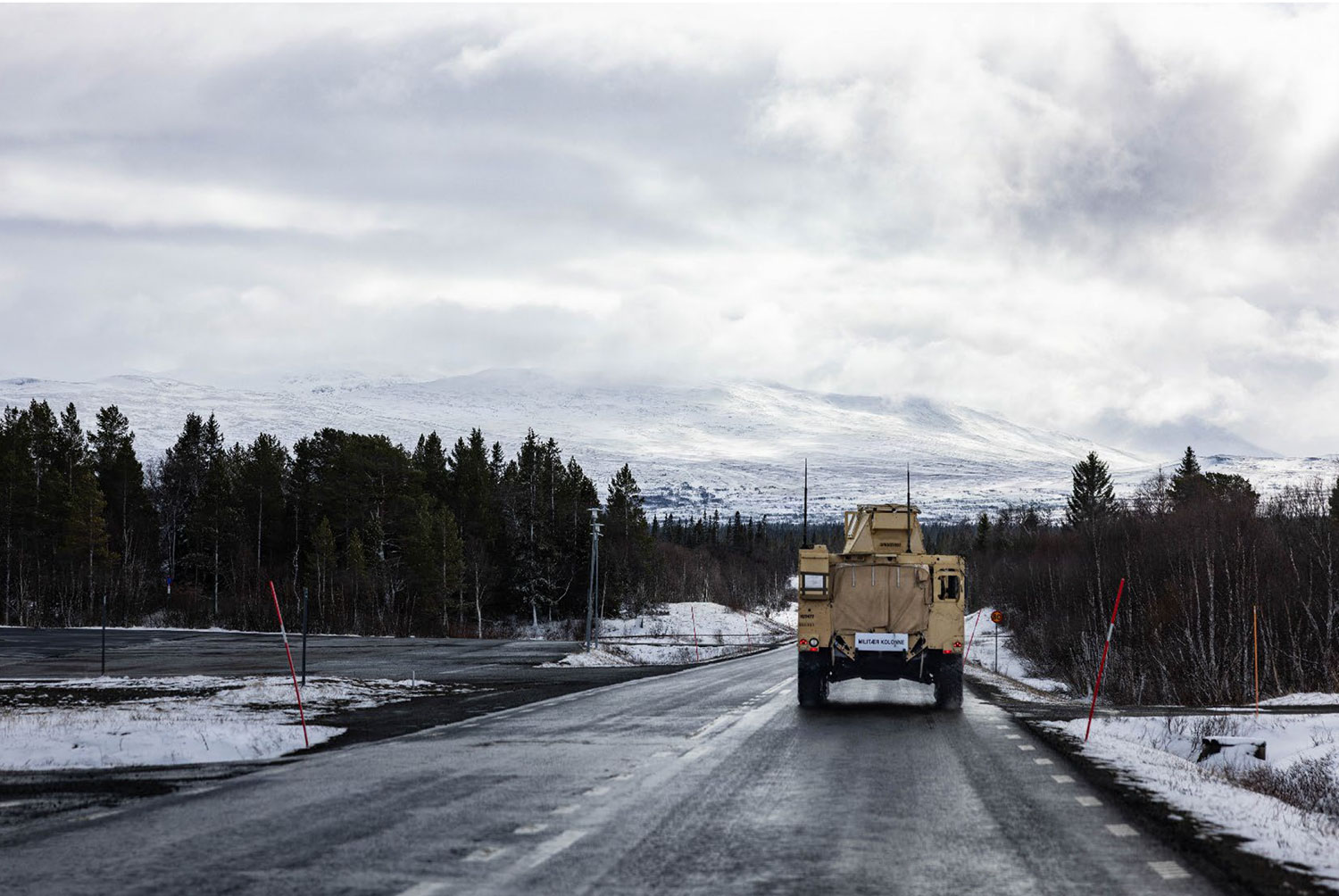
U.S. Marines and Sailors conduct a long-range convoy during exercise Aurora 26 in Sweden as part of the larger U.S. Army-led Sword 26 series of linked multinational exercises, which directly supports NATO’s Eastern Flank Deterrence Initiative concept, validates defense plans, builds a unified lethal force, and strengthens deterrence.
Sword 26
This month, 15,500 U.S. and NATO troops will conduct a series of exercises across Europe as part of Sword 26. The focus of the exercise is operationalizing NATO’s Eastern Flank Deterrence Initiative, including in the High North. The exercises will put cutting edge technology to the test, leveraging AIenabled command and control platforms, unmanned systems, and layered defense. Activities in Norway, Sweden, and Finland focus on Arctic warfare and troop mobility, building on Sword 26’s predecessor, the DEFENDER series. While DEFENDER validated the ability of U.S. forces to deploy and integrate with European counterparts, Sword takes this one step further, emphasizing the execution of regional defense plans at NATO’s eastern border. This new focus demonstrates the relevance of the Arctic on NATO’s frontline.

Any views expressed in this newsletter do not reflect the offical policy or position of the Ted Stevens Center, Department of War (DoW), or the U.S. Government. The appearance of external hyperlinks does not constitute endorsement by the DoW of the linked websites or the information, products, or services contained therein. DoW does not exercise any editorial, security, or other control over the information you may find at these sites.