
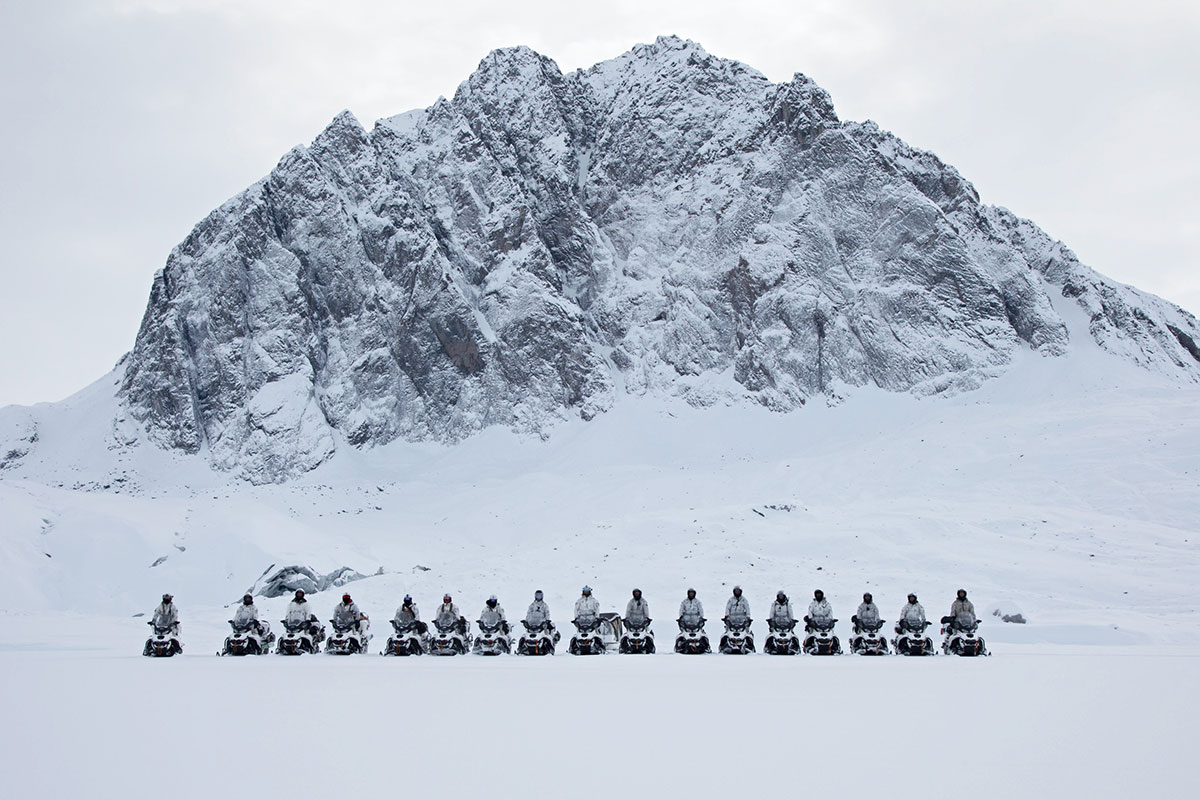
Members of the U.S. Special Operations Mountain Warfare Training Center (SOMWTC) and Danish Special Operation Forces (DANSOF) pose for a group photo in the mountains of Mestersvig, Greenland, March 6, 2024.
This week, we explore the GIUK Gap through:
- The Big Picture: Greenland
- Lat & Long: Iceland
- From the Field: United Kingdom
The Big Picture
Greenland
In the last year, Google searches for “Greenland” increased nearly ten-fold, following increased attention to the territory’s geostrategic importance. In the U.S., top queries included “Does Greenland have oil?” and “Is Greenland part of NATO?” This North Atlantic island of 57,000 people has come into focus for the American public, even if the details remain a bit fuzzy.
To answer those two questions: yes and yes. The U.S. Geological Survey estimates Greenland’s undiscovered oil resources at 31 billion barrels, in addition to significant mineral reserves. Greenland is an autonomous territory of the Kingdom of Denmark, itself a founding member of NATO.
Beyond the facts and figures, U.S. lawmakers and government officials have taken up deeper questions on Greenland’s role in Arctic security and homeland defense. Geographically, Greenland forms the Western edge of the Greenland-Iceland-United Kingdom (GIUK) Gap. This naval chokepoint “constitutes a strategic corridor that enables the control of maritime traffic and the detection of hybrid threats” traveling to and from the Arctic. The 20th century clarified the GIUK Gap’s importance to U.S. homeland defense when first German then Russian ships, subs, and aircraft used the gap to project power into the Atlantic Ocean. Today, the GIUK Gap remains a gateway for Russia’s Northern Fleet, based on the Kola Peninsula, to reach the Eastern Seaboard.
To secure this approach to the homeland, in 1951 the U.S. signed an agreement on the defense of Greenland with Denmark. The agreement granted the U.S. permission to establish military bases on the island, like Pituffik Space Base. Before it became home to the Space Force, the U.S. built the base in secret through an operation codenamed “Bluejay.” Since then, the base and Greenland as a whole have served as a hub for security cooperation, hosting U.S., Canadian, Danish, and other allied forces for joint operations that strengthen NATO capabilities in the North.
Lat & Long
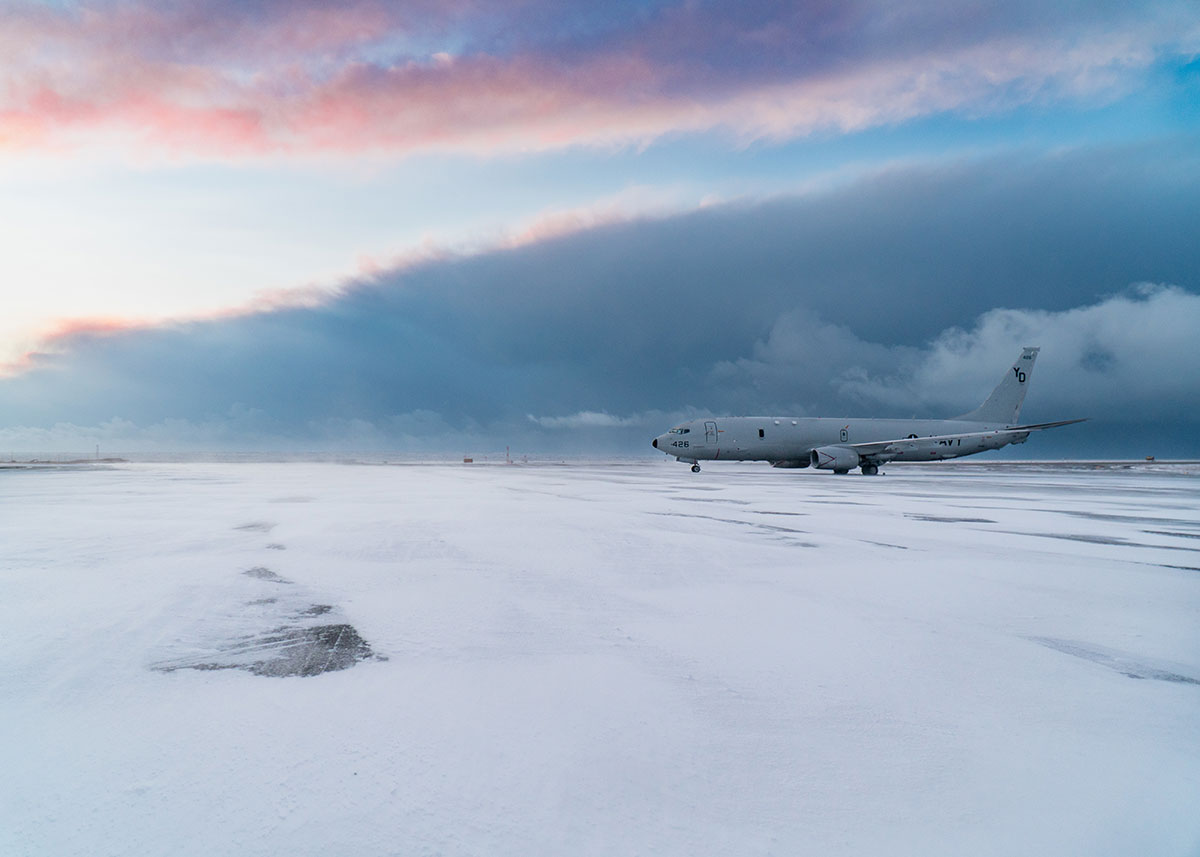
A P-8A Poseidon maritime patrol and reconnaissance aircraft parked on the apron of Keflavik Air Base, Jan. 02, 2020.
Iceland
As a founding NATO member with no standing armed forces, Iceland’s strategic importance is anchored in its geography. Keflavík Air Base, at 63°59′ N, 22°36′ W, provides the platform needed for allies to monitor the seas and skies of the GIUK Gap. Joint exercises like Northern Viking and Dynamic Mongoose demonstrate Iceland’s role in securing the sea lines of communication between North America and Europe.
Last month’s realignment of Finland, Sweden, and Denmark under NATO’s Joint Force Command Norfolk underscored the alliance’s goal to “strengthen the Euro-Atlantic area as much as possible.” This reorganization recognizes the geostrategic importance of the GIUK Gap as the primary transit route for Russia’s Murmansk-based Northern Fleet into the Atlantic. This past summer, the USS Newport News made the first port call by a nuclear-powered submarine in Iceland. From anti-submarine warfare to air defense, the security of the GIUK Gap and by extension, the forward defense of the homeland, depends on Keflavík.
From the Field
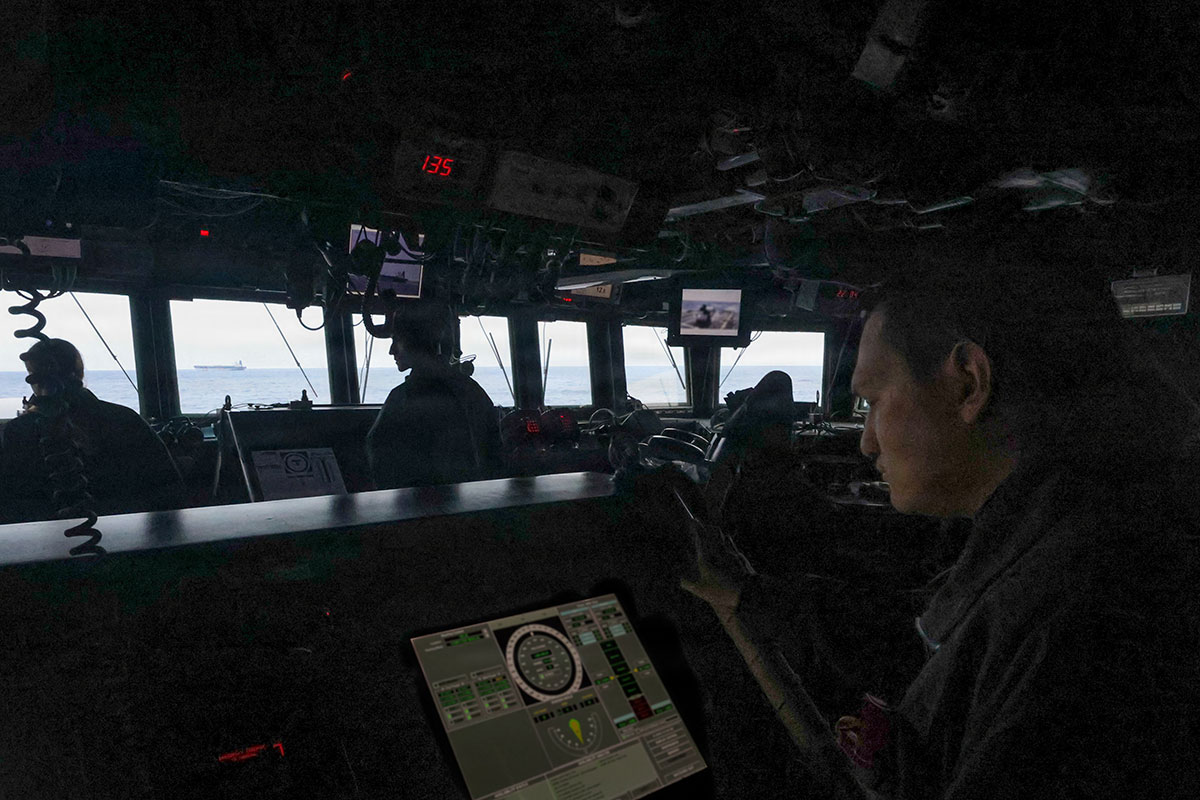
USS Paul Ignatius (DDG 117) conducts maritime operations in support of M/V Bella 1 seizure, in the North Atlantic Ocean, Jan. 7, 2025.
United Kingdom
After a pursuit across the Atlantic Ocean, allied forces closed in on the sanctioned oil tanker Bella 1 as it approached the narrows of the GIUK Gap. On Jan. 7, U.S. forces conducted a joint operation to seize the vessel, which had fled Venezuelan waters in the days following Maduro’s capture. The U.K. enabled the mission’s success, providing operational support including basing and air surveillance. This international security cooperation proved allied capabilities to slam shut the gateway of the GIUK Gap and disrupt shadow fleet operations.
According to U.K. Foreign Secretary Yvette Cooper, “Britain is stepping up on Arctic security” as a whole. In December, the U.K. announced a historic first step: a defense agreement with Norway to operate a joint fleet of anti-submarine warfare frigates. While not an Arctic state by territory, the U.K.’s role securing northern approaches makes it a key partner in the High North.

Any views expressed in this newsletter do not reflect the offical policy or position of the Ted Stevens Center, Department of War (DoW), or the U.S. Government. The appearance of external hyperlinks does not constitute endorsement by the DoW of the linked websites or the information, products, or services contained therein. DoW does not exercise any editorial, security, or other control over the information you may find at these sites.