
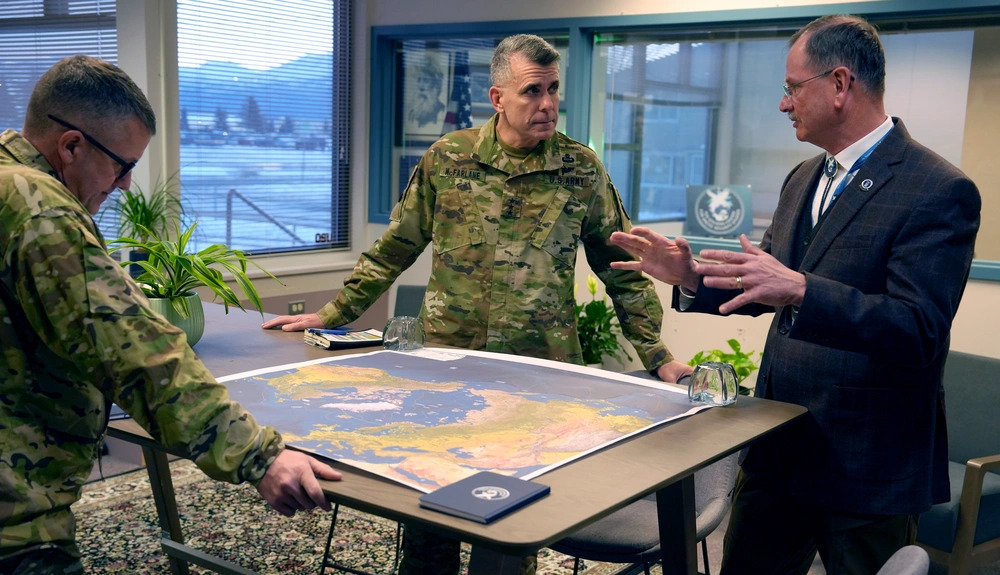
Randy “Church” Kee, director of the Ted Stevens Center, greeted McFarlane upon arrival and discussed the center’s mission to deliver Arctic-focused education and analytical support that enhances I Corps’ ability to prepare, plan and operate across complex environments. The center’s work provides leaders with insight into geographic risk, operational challenges and the strategic significance of the Arctic.
During the visit, Kee outlined the center’s organizational structure and highlighted its expanding capabilities, including a new production studio designed to support education and strategic communication efforts. These resources enable the center to provide timely, relevant content that supports I Corps’ mission to deploy, fight and win as America’s forward land power in the Arctic-Pacific region.
Kee also emphasized the geographic importance of the Arctic, explaining how distance, terrain and environmental conditions shape force employment and operational risk. The center’s education and analysis help I Corps leaders better understand how Arctic considerations influence readiness, mobility and large-scale combat operations.
The visit concluded with McFarlane touring the facility and engaging with center leadership, underscoring the partnership between I Corps and the TSC. The engagement reflected a shared commitment to equipping warfighters with the knowledge and understanding required to operate effectively in challenging environments like the Arctic.