
The Ted Stevens Center for Arctic Security Studies convenes monthly meetings of its National and Arctic Interest Chairs. The meetings are a platform for TSC-affiliated Arctic security experts to discuss issues of common interest.
During the Nov. 19 meeting, the Chairs discussed recent developments in Canadian Arctic security, including Northwest Passage transits and national infrastructure projects.
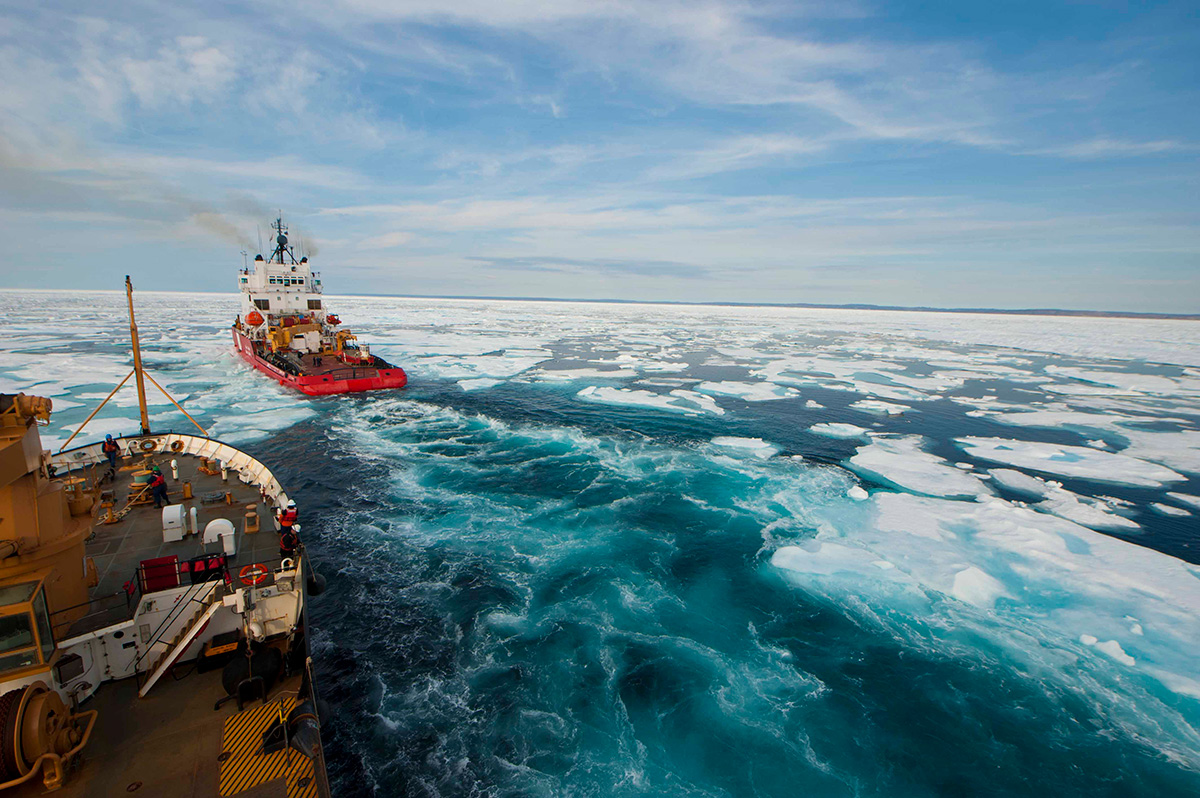
The 2025 season saw over a dozen transits of the Northwest Passage through Canada’s Arctic archipelago. While most of the transits concluded successfully, one cargo vessel ran aground on transit from Asia to Quebec. The ship remained immobilized in Franklin Strait for more than a month. The Chairs noted that less than 20% of Canada’s Arctic waters have been adequately charted, posing a challenge to safe passage through the Canadian Arctic. Discussion turned to the Canadian Coast Guard’s role in maritime safety and security, which remains unchanged as the agency moves under the Department of National Defence. The re-organization presents an opportunity to advance domain awareness and safety through enhanced information sharing between the Coast Guard and other defense authorities.
Beyond better information, the Chairs also identified infrastructure as a critical enabler of future Northwest Passage traffic. Canadian Prime Minister Mark Carney recently proposed an “Arctic Economic and Security Corridor” as a future nation-building project, with major implications for Canada’s North. The proposed dual-use infrastructure development would terminate at a new port in Grays Bay, roughly the midpoint of the Northwest Passage. The TSC’s Chairs agreed this investment could benefit both local communities via economic opportunity and North American security more broadly by accommodating larger civil and military vessels. The TSC Chairs engage with security practitioners and subject matter experts on North American infrastructure development from Nome to Nuuk via the TSC’s North American Arctic Security Dialogue.
The TSC’s National and Arctic Interest Chairs program integrates national Arctic security networks as well as distinguished subject matter experts to advance a common understanding of and best practices for Arctic security and defense. The Chairs include representatives from Norway, Sweden, and Canada as well as Chairs from the U.S. Coast Guard, Alaska National Guard, NOAA and Chairs for Energy & Economics as well as Polar Governance.