

Crown Prince and Prime Minister Mohammed bin Salman Al Saud of Saudi Arabia joins U.S. President Donald Trump for a bilateral meeting at the White House
This week, we explore American allies’ role in Arctic security through:
- The Big Picture: American Alliances from Arabia to the Arctic
- Power Plays: Russia in the Gray
- In Orbit: First NATO Arctic Space Forum
The Big Picture
American Alliances from Arabia to the Arctic
Last week, Saudi Arabian Crown Prince and Prime Minister Mohammad bin Salman visited the White House alongside Saudi Pro soccer star Cristiano Ronaldo. While Ronaldo’s selfie from the White House state dinner went viral, the real story came from an array of bilateral agreements signed during the Crown Prince’s meeting with President Trump.
Spanning everything from fighter jets, to AI, to critical minerals, the resultant deals targeted the same arenas of global geostrategic competition the U.S. faces in the Arctic. As the U.S.-China Economic and Security Review Commission noted in their recently released 2025 report, China aims “to advance its economic, energy, technological, scientific and security interests” in the Arctic and beyond. The U.S.-Saudi agreements counter Chinese advances across these areas with international partnership by deepening cross-border investment, diversifying the global critical minerals supply chain to reduce China’s leverage, and providing top grade U.S. military equipment to the kingdom. Deals on sensitive technology like nuclear energy and artificial intelligence demonstrate trust that the Saudis will safeguard American innovations.
The day after the Saudi Crown Prince’s visit to the White House, Canadian and Finnish officials arrived in Washington to promote another international technical partnership, the Icebreaker Collaboration Effort (ICE) Pact. The trilateral effort directly supports President Trump’s Executive Order on Restoring America’s Maritime Dominance by sharing resources and expertise to develop U.S. domestic shipbuilding capabilities. The ICE Pact signatories have agreed to continue the partnership into 2026, citing successes this year. The Trump administration announced in October the purchase of four Finnish icebreakers and the construction of seven more icebreakers, three of which will be built by Canadian shipbuilder Davie.
“Countering China’s aggression is now a truly global challenge,” necessitating international collaboration from Arabia to the Arctic. A capable Arctic fleet underpins U.S. presence in the region. Earlier this year, the U.S. Coast Guard responded to Chinese research vessels operating off the Alaskan coast in the vicinity of U.S. extended continental shelf claims. The research vessels are known to carry out dual-use activity, gathering intelligence and advancing Chinese interests in the Arctic. As Chinese and joint Chinese-Russian activities increase in the region, the U.S. and its allies will play a critical role in deterrence and defense of NATO’s western flank in the Arctic-Pacific.
Power Plays
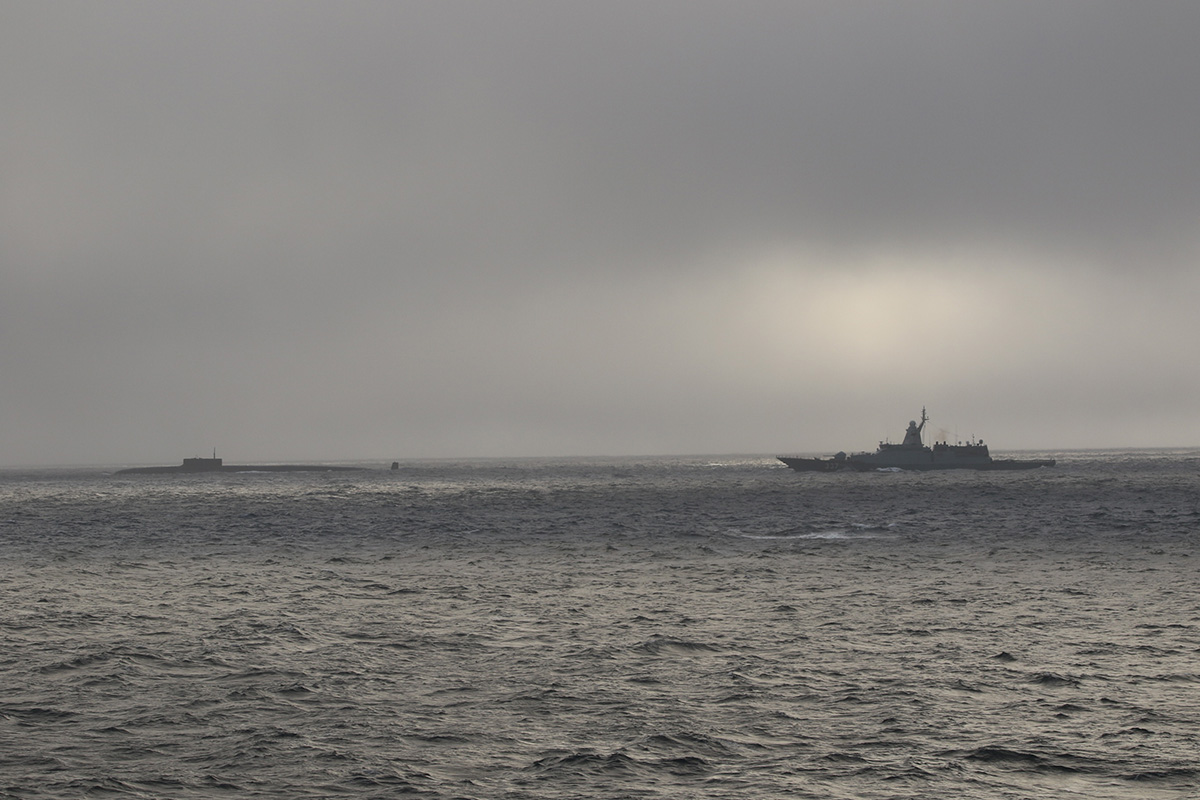
U.S. Coast Guard Cutter Stratton (WMSL 752) encountered and shadowed four Russian Federation Navy (RFN) vessels 57 miles northwest of Point Hope, Alaska, Sept. 15, 2024.
Russia in the Gray
While Sino-Russo activities off the coast of Alaska have decreased with the arrival of winter, the threat of dual-use activity by research vessels remains real this month as Russia stepped up its gray zone activities across Europe. Following the recent sabotage of Polish rail infrastructure, the research vessel Yantar sailed through the U.K.’s Exclusive Economic Zone toward the Faroe Islands. Known for carrying out dual-use research including surveillance of undersea infrastructure, the Yantar’s presence triggered a close watch by the the U.K. Ministry of Defense. British air and sea assets tightly followed the ship’s movements off the coast of Scotland and were subsequently targeted by the Yantar’s crew. Personnel aboard the Yantar directed lasers at the pilots overhead in what the U.K. MOD called “a reckless and dangerous act.” Other nearby vessels reported GPS jamming.
In Orbit
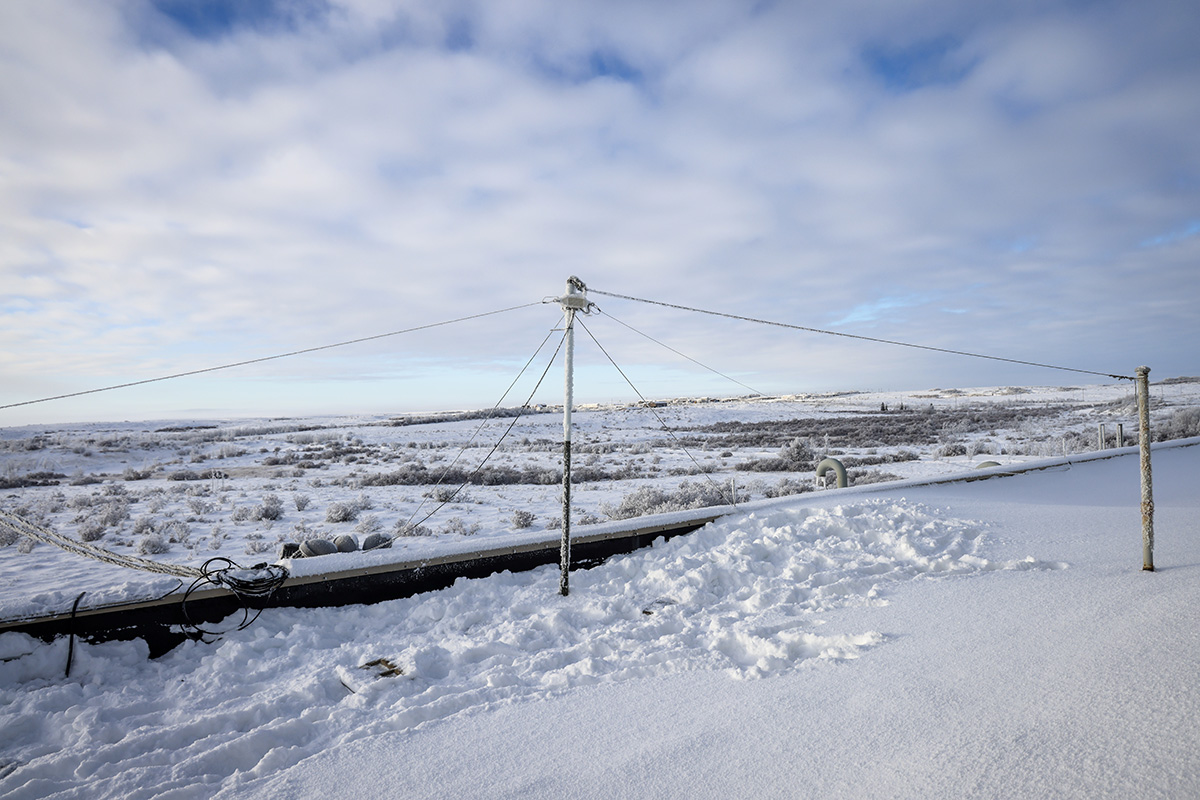
Alaska Organized Militia members installed radio and Starlink satellite communication equipment while supporting the State Emergency Operations Center following Typhoon Halong in Bethel, Alaska.
First NATO Arctic Space Forum
Industry stakeholders and subject matter experts recently joined representatives from 25 NATO Allies in Helsinki, Finland for the first ever NATO Arctic Space Forum. Hosted by the Finnish Ministry of Defence and NATO Defence Investment Division, the program aimed to “strengthen deterrence, resilience, and situational awareness in the High North.” The forum provided a platform for engagement with the commercial space sector, opening avenues to secure supply chains and accelerate innovation. Arctic security and space security remain closely connected, with polar orbits providing a unique vantage point from which to look at the whole globe. Equally critical to Arctic security is the connectivity provided by these satellites in a region characterized by limited infrastructure. The U.S. Department of War’s northernmost installation at Pituffik Space Base exemplifies the interconnectedness of the Arctic and space, enabling both contact with satellites in polar orbit and Arctic force projection.